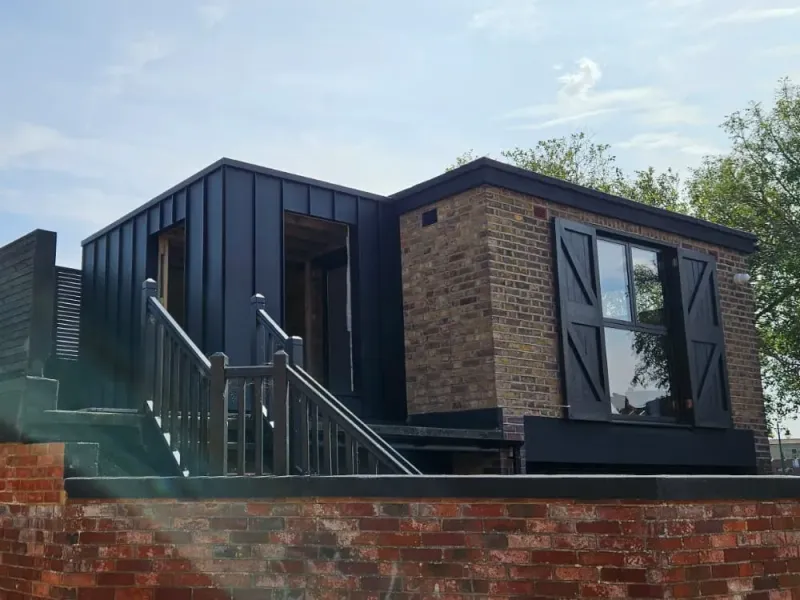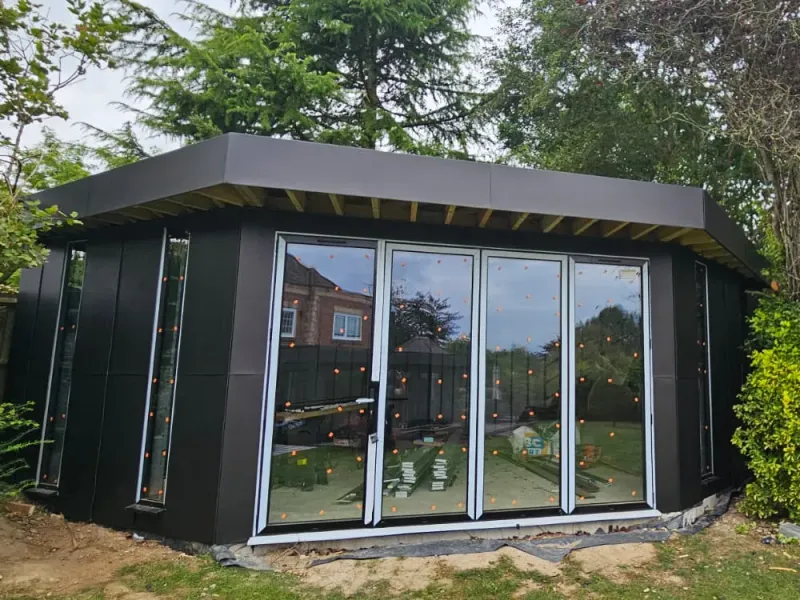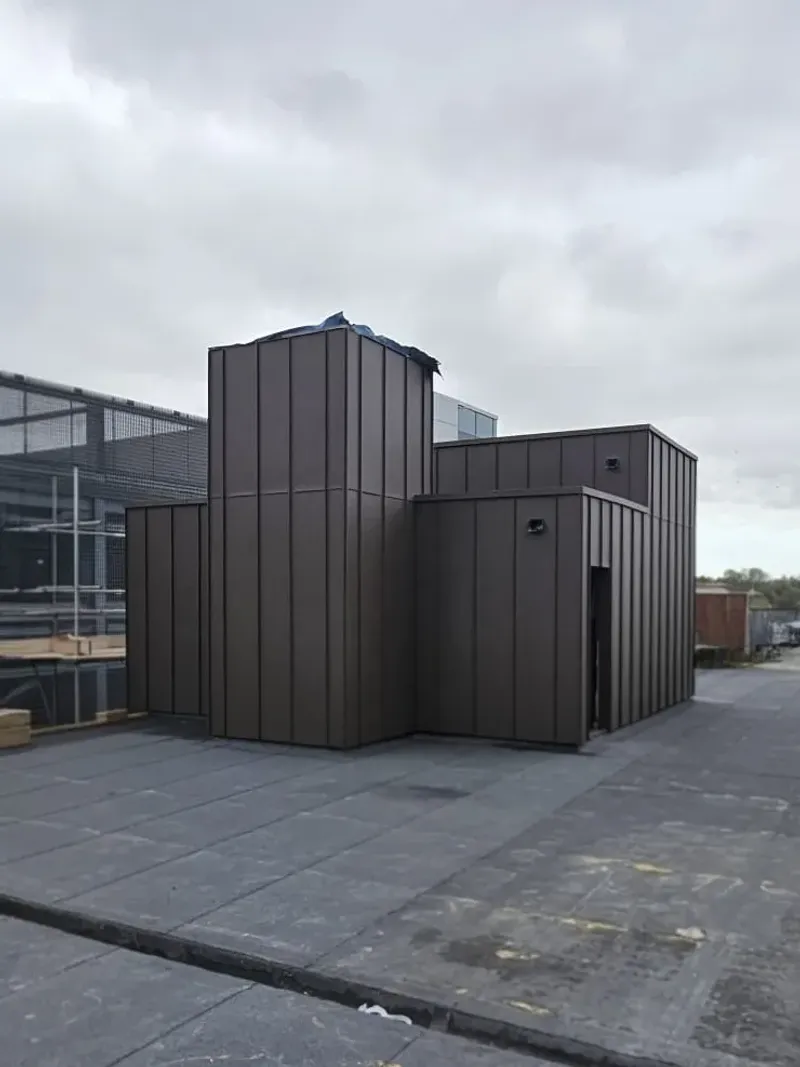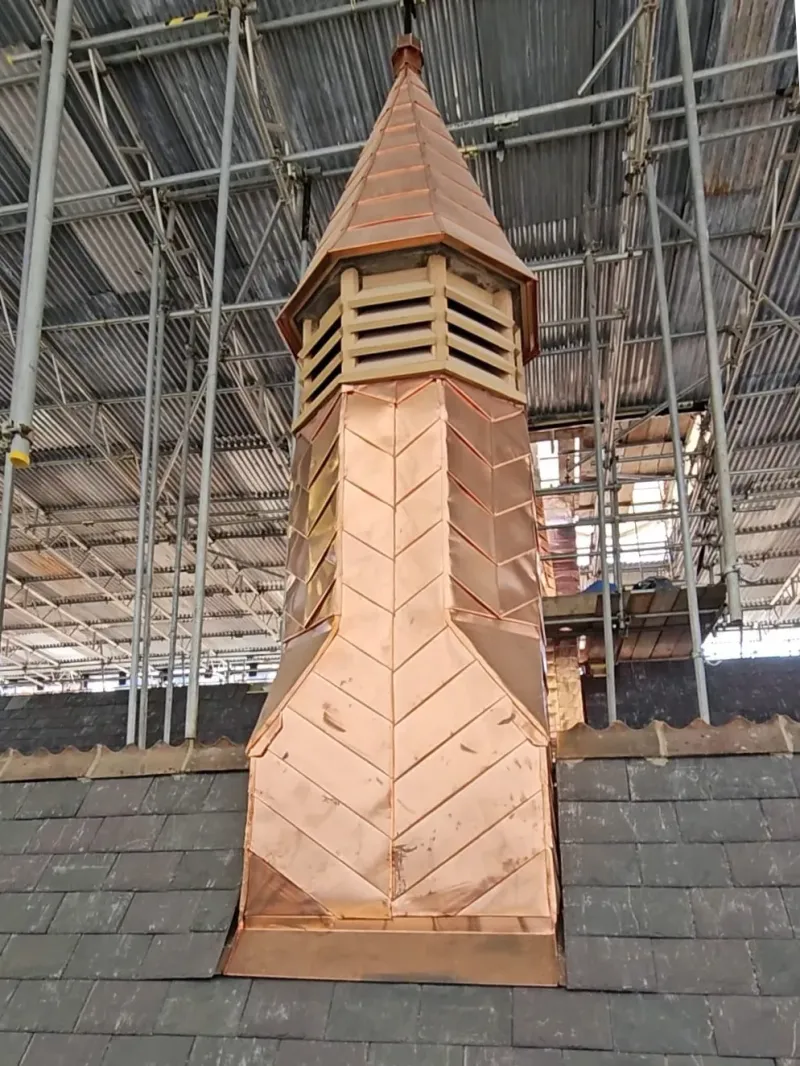
Residential extensions are one of the most common projects we work on. A rear extension, side return, or loft conversion typically creates a new roof plane — and for homeowners and architects who want something that performs well and looks considered, metal is increasingly the material of choice.
This guide covers the key decisions involved in specifying metal roofing on a residential extension, from material selection through to what happens on site.
Why metal works well on extensions
Extensions often sit in a different relationship to the street than the main house. A rear extension may be highly visible from the garden or from neighbouring properties; a loft conversion may introduce a new pitched plane that reads prominently from the road. In both cases, the roof material is part of the design, not just a weathering layer.
Metal handles this well. It has a precision and flatness that renders the geometry of a roof or facade cleanly — a quality that matters particularly on contemporary extensions where the architecture is about line and proportion rather than texture and ornament. And because zinc, copper, and aluminium all weather naturally over time, the material continues to look intentional as it ages, rather than simply becoming worn.
Beyond aesthetics, metal outperforms most alternatives on longevity. A zinc or copper roof installed on an extension will outlast the extension itself. There are no 20-year replacement cycles, no periodic recoating, and no progressive degradation from UV exposure. For a homeowner who has invested in a well-built extension, that is a meaningful consideration.
Flat or pitched: which system applies
The answer depends on the geometry of the extension, but both configurations are well-suited to metal.
Flat and low-pitched roofs
Most single-storey rear extensions have flat or very low-pitched roofs. Here, the relevant system is either a standing seam panel in a tapered configuration or a single-ply membrane — and the choice between them is largely one of budget and design intent.
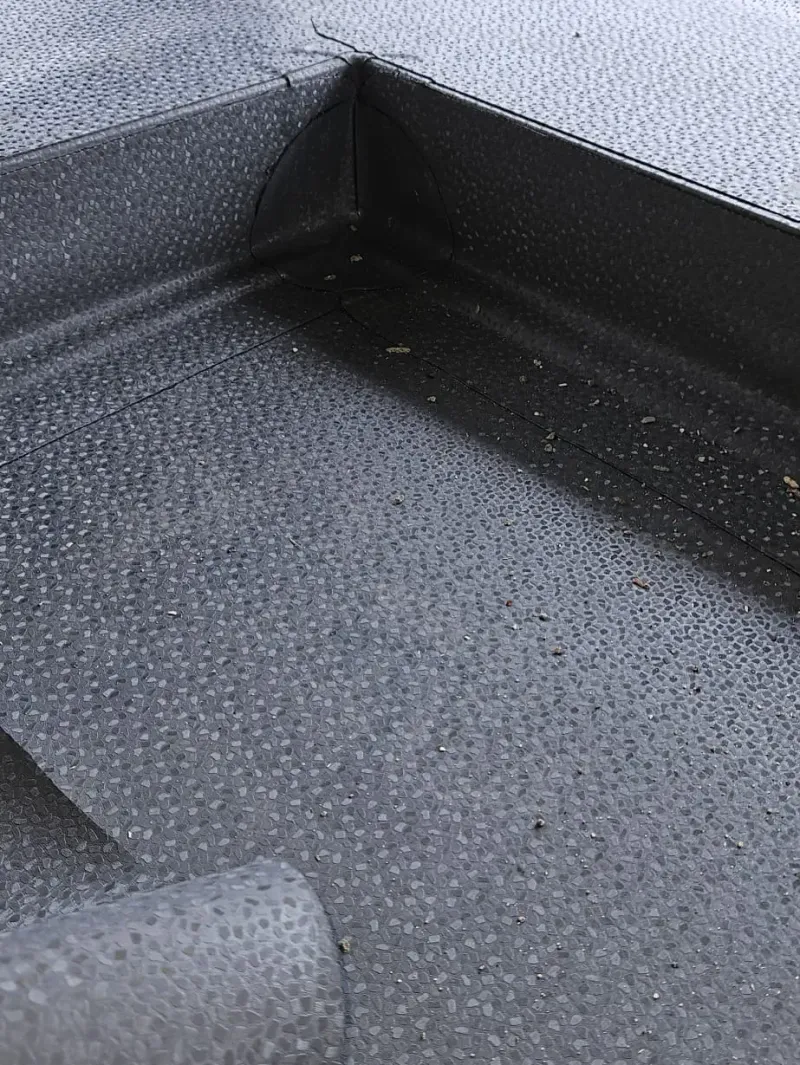
A standing seam metal roof on a flat or low-pitch application gives a clean, flush finish with concealed fixings and excellent long-term weathertightness. The panels can be oriented to drain water efficiently across the roof surface and into the guttering. At flat and very low pitches, a fully supported substrate is required, and the detailing at the perimeter — upstands, flashings, and the connection to the wall — needs to be carefully designed.
Single-ply membrane is an alternative where the design calls for a more utilitarian finish, or where budget is a constraint. We install single-ply systems where appropriate and can advise on which is the better fit for a given project.
Pitched roofs
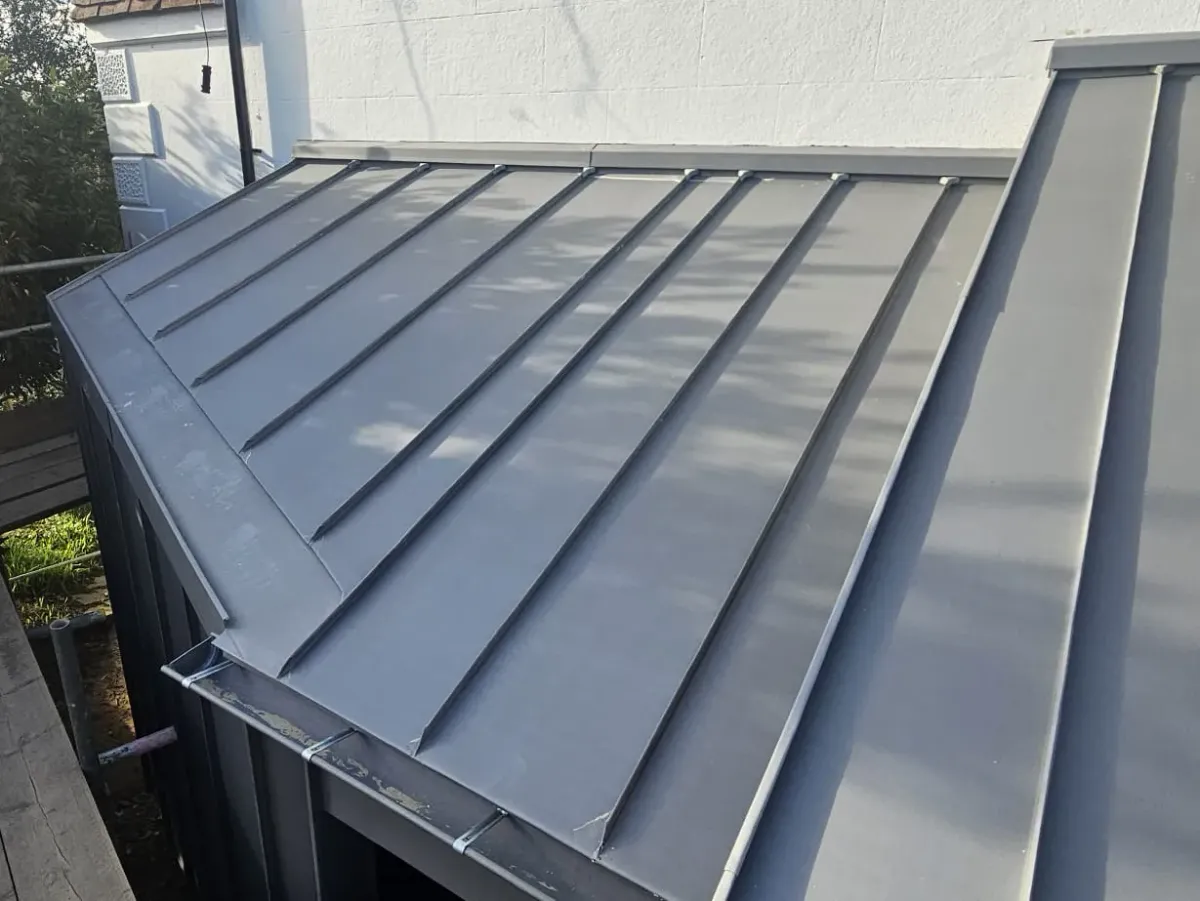
Loft conversions and side returns with a pitched roof open up the full range of metal roofing systems. Standing seam in a vertical or horizontal orientation is the most common choice, giving a clean linear appearance that works well on both contemporary and traditional extensions. Flat lock is an option where a smoother surface finish is preferred, or where the geometry of the roof is complex.
Pitch affects material selection too. At lower pitches — below around 7 degrees for some systems — additional waterproofing details are required at the seams. A good installer will advise on the minimum pitch requirements for the system and material being specified.
Choosing the right material
The four main metals each bring something different. The right choice depends on the design brief, the context of the building, and the budget.
Zinc is the most commonly specified metal on residential extensions in London and the South East. It has a natural grey tone that is contextually versatile — it works against stock brick, timber cladding, render, and glazing without looking forced. Over time it develops a patina that deepens the surface and gives it a settled quality. Zinc is also dimensionally stable and well-suited to the complex detailing that extensions often require. See our zinc material page for more detail.
Aluminium offers a lighter weight and a broader range of pre-finished colours, which can make it useful where a specific tone is required to match an existing palette or satisfy a planning condition. It is also more cost-effective than zinc or copper and performs well over the long term. See our aluminium material page for more detail.
Copper is the most architecturally distinctive of the metals and commands the highest material cost. On the right project — a heritage setting, a high-specification new build, or an extension where the copper is intended to become a defining feature of the building over time — it is exceptional. Its evolution from bright warm tones through brown to verdigris is a quality that no other roofing material replicates.
Steel in pre-finished form is an option for agricultural and utilitarian applications and increasingly for contemporary residential projects where a specific colour or profile is required. See our steel material page for more detail.
A full comparison of the materials — including cost, lifespan, and maintenance requirements — is covered in our guide to choosing your cladding material.
Planning considerations
Most single-storey rear extensions fall within permitted development, which means the choice of roofing material is at the homeowner’s discretion. However, there are situations where planning permission is required and where the local authority may have a view on materials.
If the property is in a conservation area or Article 4 direction area — common in parts of London and across many historic towns in the South East — permitted development rights may be restricted, and the external materials of an extension may need approval. In these cases, the planning officer’s response to metal cladding will depend on the local character and the quality of the design drawings.
If the extension requires a full planning application for any reason — because it exceeds permitted development limits, or because the property is listed — the material choice becomes part of the application. Metal cladding is approved in planning applications across the UK, including in sensitive contexts, when it is well-presented and supported by clear design reasoning.
Our full guide to planning permission for metal cladding covers this in more detail.
What to expect from installation
Metal roofing on a residential extension typically follows the structural frame and any waterproofing or substrate work. For a standing seam system, the sequence is broadly: substrate (decking, insulation, and ventilation layer if required), breather membrane, batten and counter-batten, then the metal panels themselves. Flashings at the perimeter, upstands, and any penetrations are formed and fitted as the installation progresses.
The time on site varies with the complexity and size of the roof, but a straightforward single-storey extension roof can typically be installed in one to three days once the substrate is ready. More complex geometries — hips, valleys, internal gutters, or a combination of roof and wall cladding — take longer.
Lead times for zinc and copper can be several weeks from order. It is worth confirming material availability with your installer early, particularly if you are working to a programme with other trades following on.
Talk to Met-Tec
We work on residential extensions across London and the South East, from straightforward rear extension roofs through to architecturally complex projects involving multiple materials and geometries. If you are planning an extension and want to discuss the roofing options, get in touch — we are happy to advise before any commitment is made.