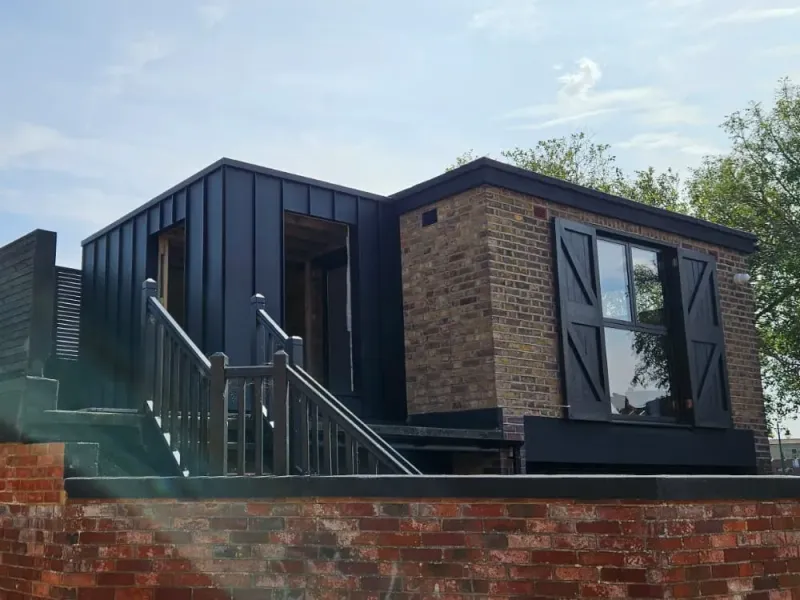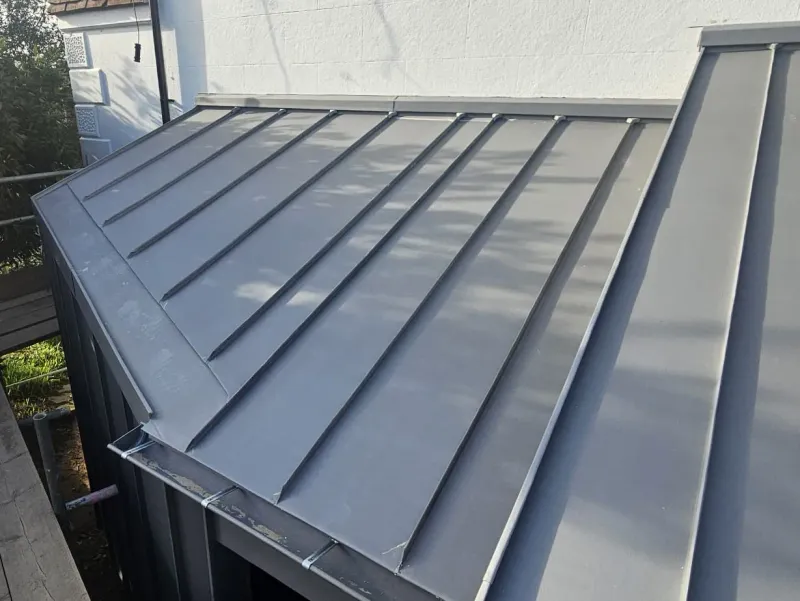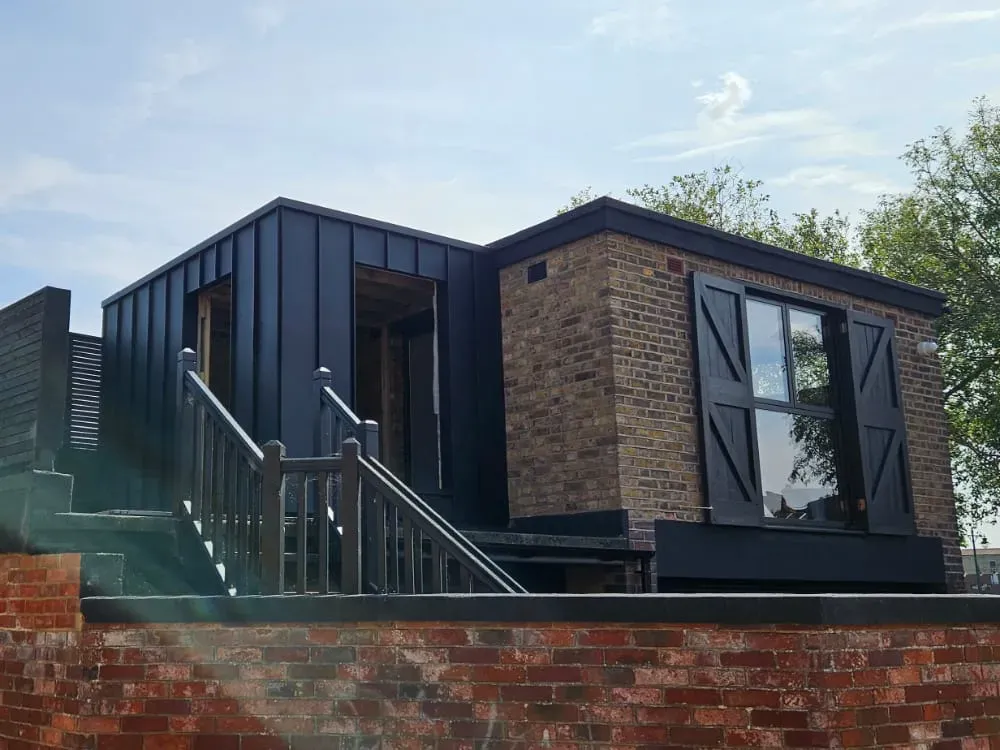
Zinc and aluminium are both strong choices for residential extension roofs. They are lightweight, durable, clean-looking, and suitable for modern metal roofing systems. The better choice depends on what matters most for the project: natural patina, colour control, budget, lifespan, or planning context.
For many contemporary extensions, zinc is the default architectural choice. It has a natural grey finish, develops a protective patina, and sits comfortably against brick, render, timber, and glass. Aluminium is often the more flexible option with a lower upfront cost, especially where a specific colour or finish is required.
This guide compares the two materials for extension projects.
The short answer
Choose zinc if you want:
- a natural metal finish
- a long service life
- a soft grey patina
- a premium architectural appearance
- a material that ages visibly and gradually
Choose aluminium if you want:
- a specific colour
- a lighter material
- a more controlled finish
- a more budget-flexible metal option
- good performance without zinc’s natural patina
Both can work well on residential extensions. The decision is usually about the design intent and the budget, not whether one material is universally better.
Cost and value
Zinc usually costs more than aluminium on a like-for-like basis. The difference comes from both material cost and the specialist craft involved in forming and detailing zinc systems.
Aluminium can be a more practical route where the project needs the clean lines of metal roofing but has a tighter budget. It also benefits from broad availability in pre-finished systems and colours.
That said, cost should be judged over the life of the roof, not only at installation. Zinc has a very long service life when correctly installed, so the cost per year over its service life can compare favourably with cheaper materials on projects designed to last. Aluminium also performs well, but its finish type matters: powder-coated, anodised, and other systems age differently.
For a wider look at material cost and performance, see our metal cladding comparison guide.
Appearance
Zinc has a natural, restrained appearance. It starts brighter and develops a matte grey patina over time, or it can be specified in a pre-weathered finish for a more settled look from day one.
This makes zinc a strong fit for:
- rear extensions on brick houses
- loft dormers
- contemporary new-build forms
- roof and wall cladding combinations
- projects where the material should look natural rather than coated
Aluminium is different. It does not patinate in the same way as zinc and is usually chosen for a controlled, pre-finished appearance. That can be a major advantage where the roof needs to match windows, doors, fascia, cladding, or a planning-approved colour.
Aluminium is often the better choice when the design calls for black, anthracite, bronze, green, or another precise colour.
Lifespan and maintenance
Both zinc and aluminium are low-maintenance materials when correctly specified and installed.
Zinc develops a self-protective patina, which is one of the reasons it is valued for long-life roofing and cladding. It does not need painting, and routine maintenance is usually limited to keeping gutters clear and checking details periodically.
Aluminium relies more on the quality of its finish. A good coating or anodised finish can perform for decades, but the colour and surface condition are part of the product specification. If coating damage occurs, it should be dealt with promptly to protect the appearance of the roof. Left untreated, damaged coating can allow oxidation and staining that’s difficult to reverse.
Neither material should be treated as maintenance-free. Rooflights, gutters, outlets, abutments, and penetrations still need inspection because those details are where roof issues most often begin.
Weight and installation
Both zinc and aluminium are lightweight compared with many traditional roofing materials. This is useful on extensions, where the new roof may sit on steelwork, timber framing, or existing walls.
Aluminium is especially light, which can help where structural weight is a concern. Zinc is still a lightweight roof covering, but it is chosen more often for its appearance, patina, and architectural character than for weight alone.
Installation quality matters with both. A standing seam system needs correct clips, movement allowance, substrate preparation, and perimeter detailing. The material choice does not remove the need for specialist installation.
Planning and design context
In planning terms, zinc is often accepted on contemporary residential extensions because its grey tone is relatively restrained. It can sit quietly alongside older brickwork and natural materials.
Aluminium can be easier where a specific colour is required to match approved drawings, windows, or surrounding materials. It can also be useful when a planning officer wants a darker or more controlled finish rather than a naturally changing metal.
In conservation areas, the right answer depends on local character, visibility, and the quality of the design. Neither material is automatically accepted or rejected. The drawings and design rationale matter.
For broader planning considerations, see our guide to metal cladding and planning permission.
Which is better for a rear extension?
For a high-specification extension where the roof is visible from the garden or upper floors, zinc is often the stronger design choice. It looks deliberate, ages well, and suits the clean lines of modern extension architecture.
For a project where budget, colour matching, or finish consistency matters more, aluminium can be the better fit. It still gives a crisp metal roof, but with more control over colour and often a lower upfront cost.
The right choice usually becomes clear once you’ve answered a few straightforward questions:
- What will the roof be seen from?
- Does the design need a natural metal or a fixed colour?
- Is the budget driven by upfront cost or long-term value?
- Are there planning constraints?
- Are the roof and wall cladding being treated as one design?
Talk to MET-TEC
We install zinc and aluminium roofing and cladding across London and the South East, including residential extensions, dormers, and new-build projects.
If you are deciding between zinc and aluminium, get in touch. We can review the design, explain the tradeoffs, and recommend the material that best fits the project rather than forcing a default answer.