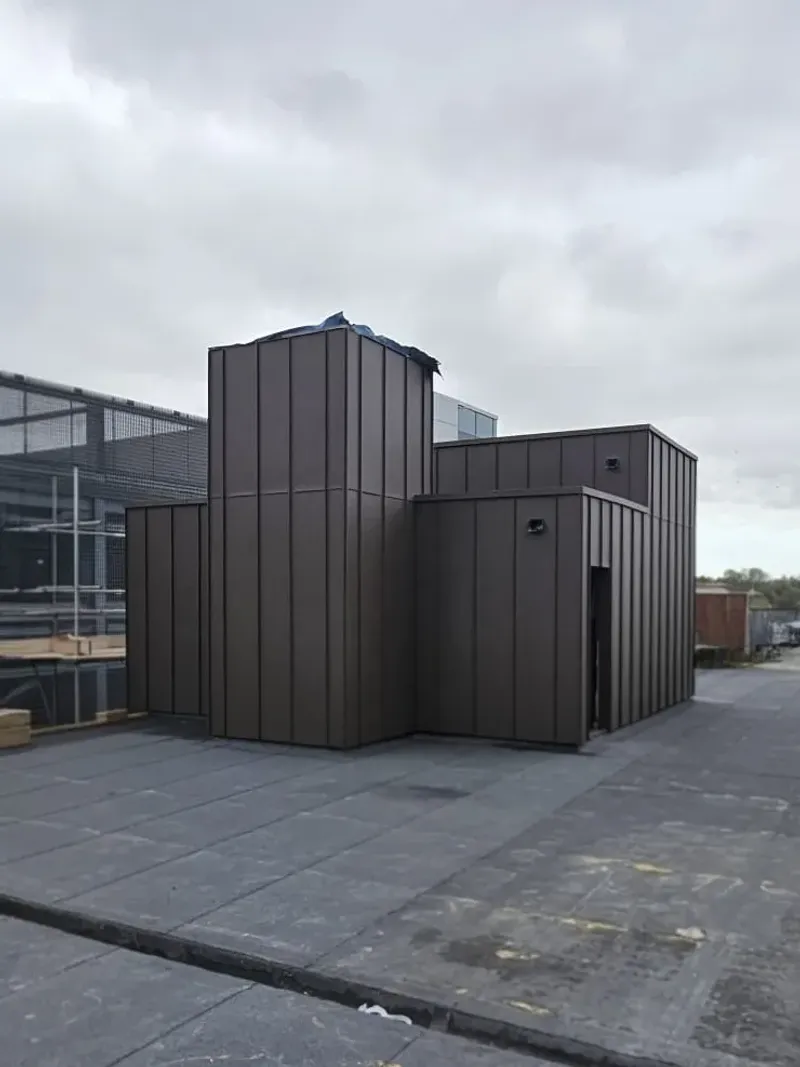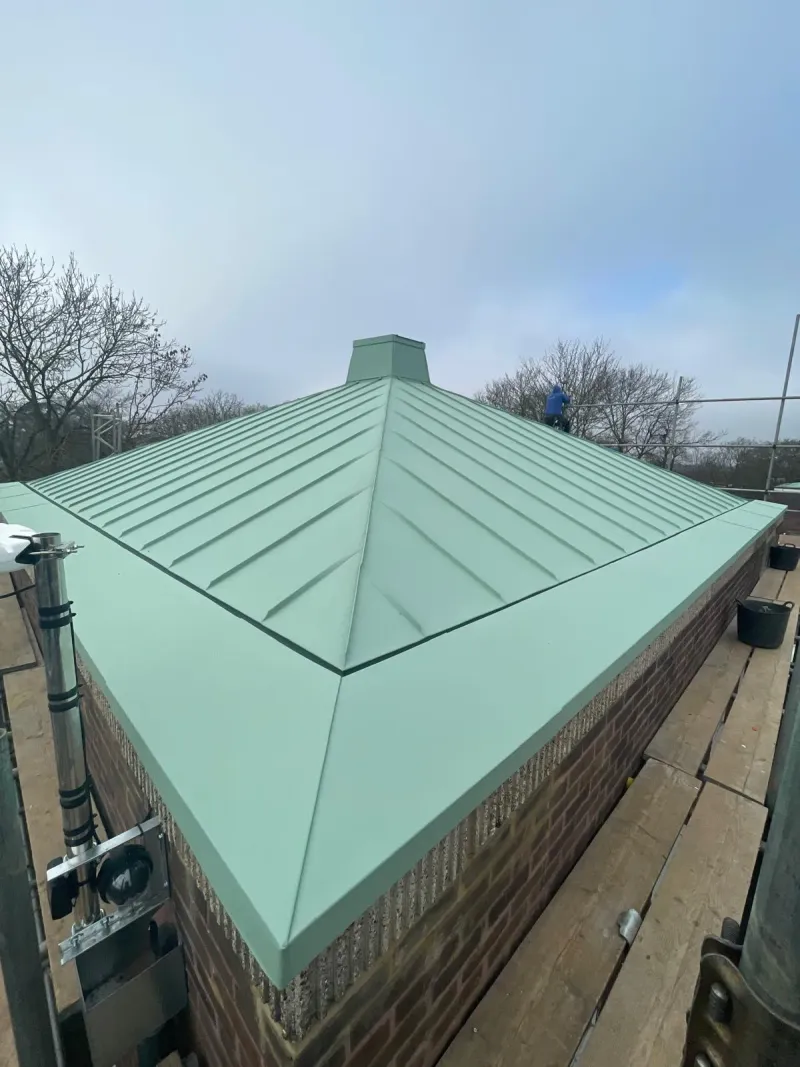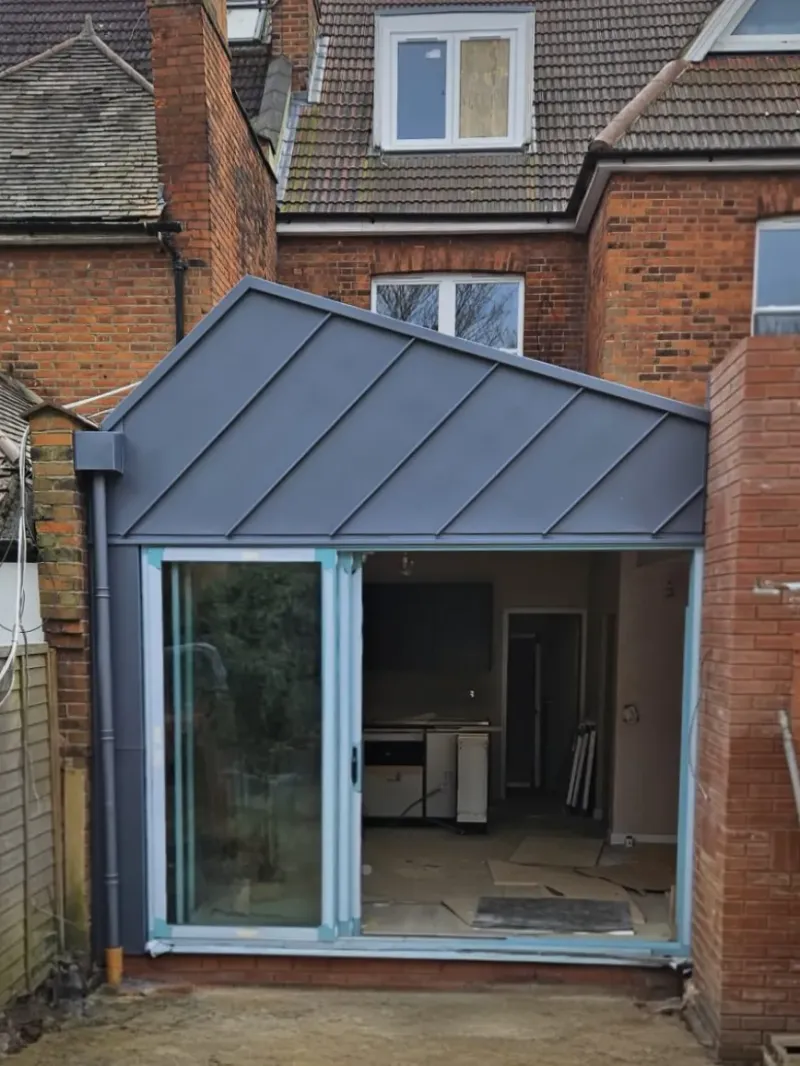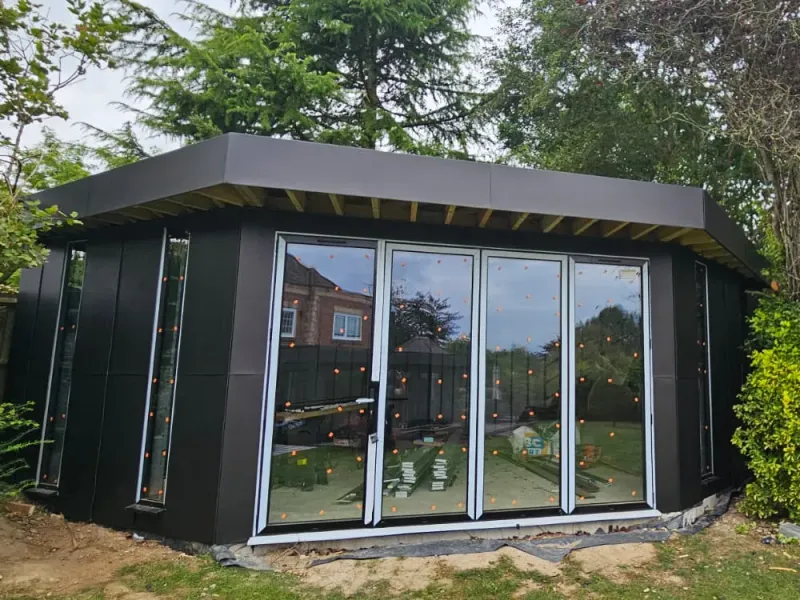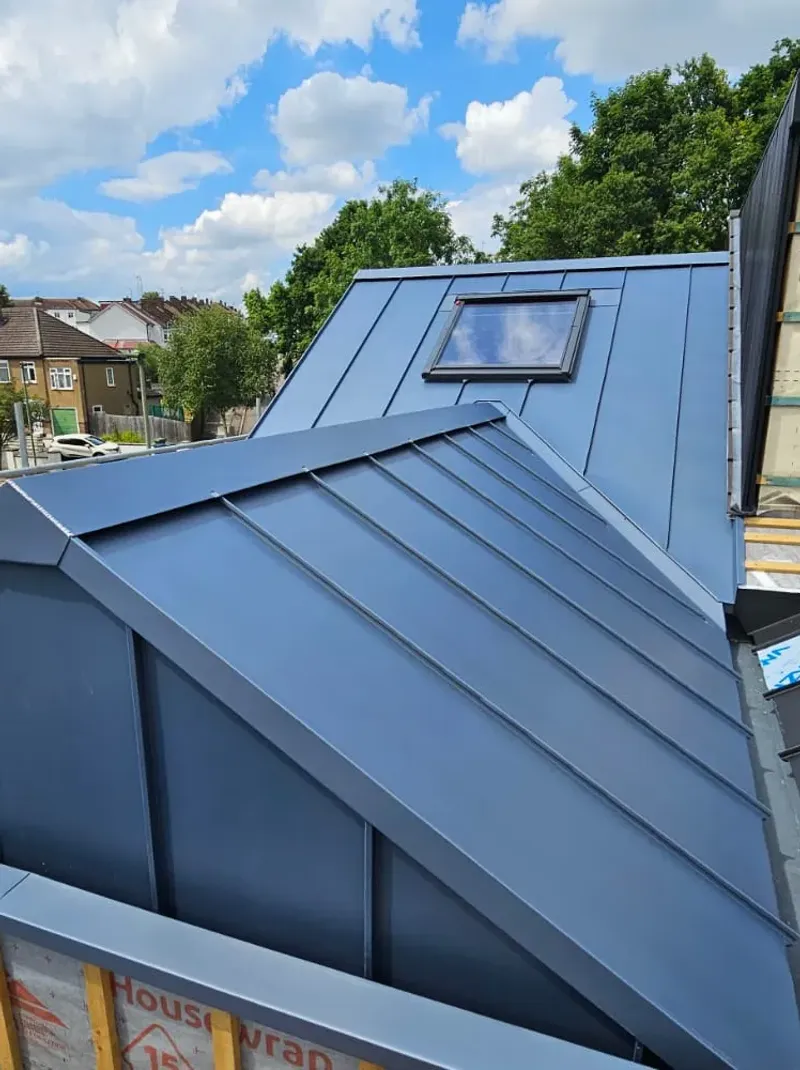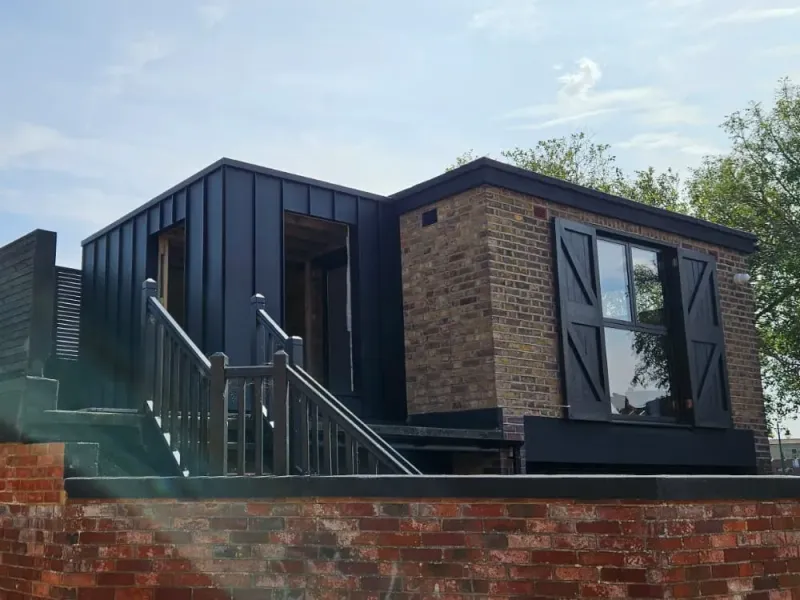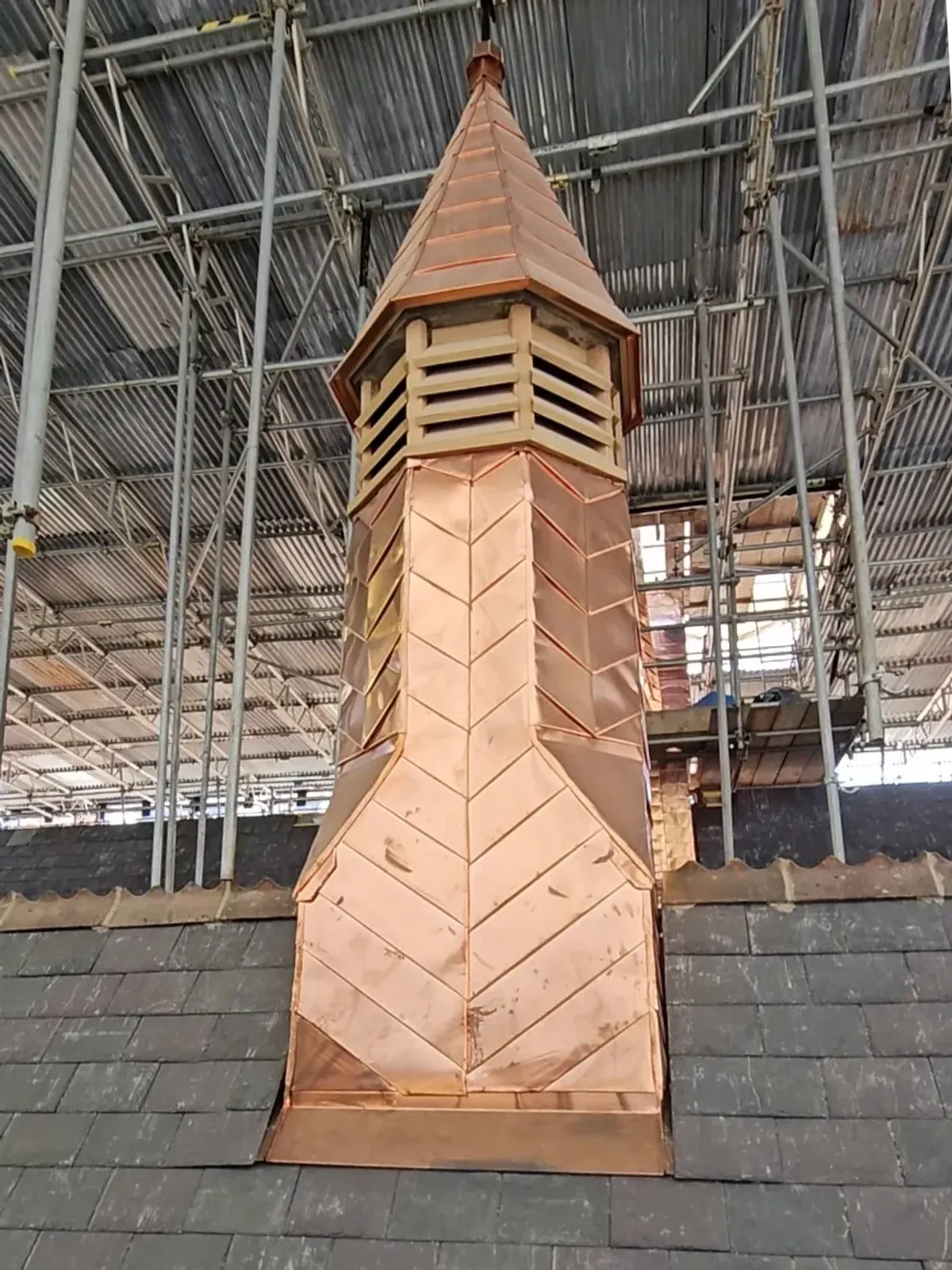
Copper brings a unique character to both commercial and residential buildings. Its remarkable flexibility allows it to adapt seamlessly to even the most complex roof designs.
Why Choose Copper?
Copper is one of the oldest roofing materials in the world and remains one of the most prized. It develops a distinctive green patina over time that is widely considered one of the most beautiful finishes in architecture. Beyond aesthetics, copper is exceptionally durable and can last well over 100 years.
- Lifespan of 100+ years with minimal maintenance
- Develops a natural, protective patina
- Highly malleable — ideal for complex shapes and detailing
- Fully recyclable and environmentally responsible
Applications
Copper is often specified for heritage and listed buildings, churches, and high-end residential projects where longevity and aesthetics are paramount. It is equally suited to contemporary architecture, where its natural patina provides a striking contrast to modern materials.
From standing seam roofing to decorative flashings and guttering, copper delivers unmatched character and durability.
Appearance Over Time
Copper is unusual in that its ageing process is part of its appeal. Fresh copper begins with warm orange and brown tones, then gradually darkens before developing the familiar verdigris patina over time. That change does not happen overnight, and the exact pace depends on the environment, orientation, and exposure of the building.
For some projects, that natural evolution is the main reason copper is chosen. It gives the building a finish that feels alive rather than static. On conservation or design-led work, that can make copper especially attractive where the roof or cladding is intended to mature gracefully over decades.
The same quality also means expectations need to be set correctly. If a client wants a fixed colour that remains unchanged, copper may not be the right fit. If they want a material that develops more character as it ages, few alternatives compare.
Where Copper Works Best
Copper excels on roofs and details that would be difficult to execute cleanly in a stiffer material. Dormers, curved forms, decorative flashings, parapet details, cupolas, and bespoke junctions all benefit from its malleability. It is also an excellent option where long service life is a major priority and the roof is expected to outlast multiple building cycles.
It is commonly used on prestige homes, landmark buildings, listed property work, and selected contemporary projects where the roof is intended to be a defining architectural feature. In these settings, copper is rarely chosen as the cheapest option. It is chosen because the material itself adds value to the finished building.
Is Copper Right for Your Project?
Copper is best suited to projects where appearance, lifespan, and detailing are all major priorities. It works especially well on prestige residential schemes, conservation-led work, feature roofs, and buildings where the natural ageing process of the material is part of the design intent.
Its flexibility allows precise fabrication around complex junctions, curved forms, dormers, and bespoke architectural elements. Although it sits at the premium end of the market, many clients choose copper because it combines visual impact with exceptional long-term performance.
We help clients assess whether copper is the right material for the roof geometry, project brief, and expected finish before moving into manufacture and installation.
What to Consider Before Choosing Copper
The main trade-off is cost. Copper is a premium material, so it is typically chosen when the project brief genuinely values appearance, longevity, and detailing quality. It also needs to be detailed carefully alongside adjacent materials to avoid compatibility issues and to ensure weathering happens as expected.
On the right project, however, copper can be one of the strongest lifetime-value choices available. A well-installed copper roof or cladding package can perform for generations while developing a finish that is difficult to replicate with any other material.
If the project calls for a material with strong visual character, outstanding lifespan, and the ability to handle complex detailing, copper is often the benchmark against which the other options are judged.