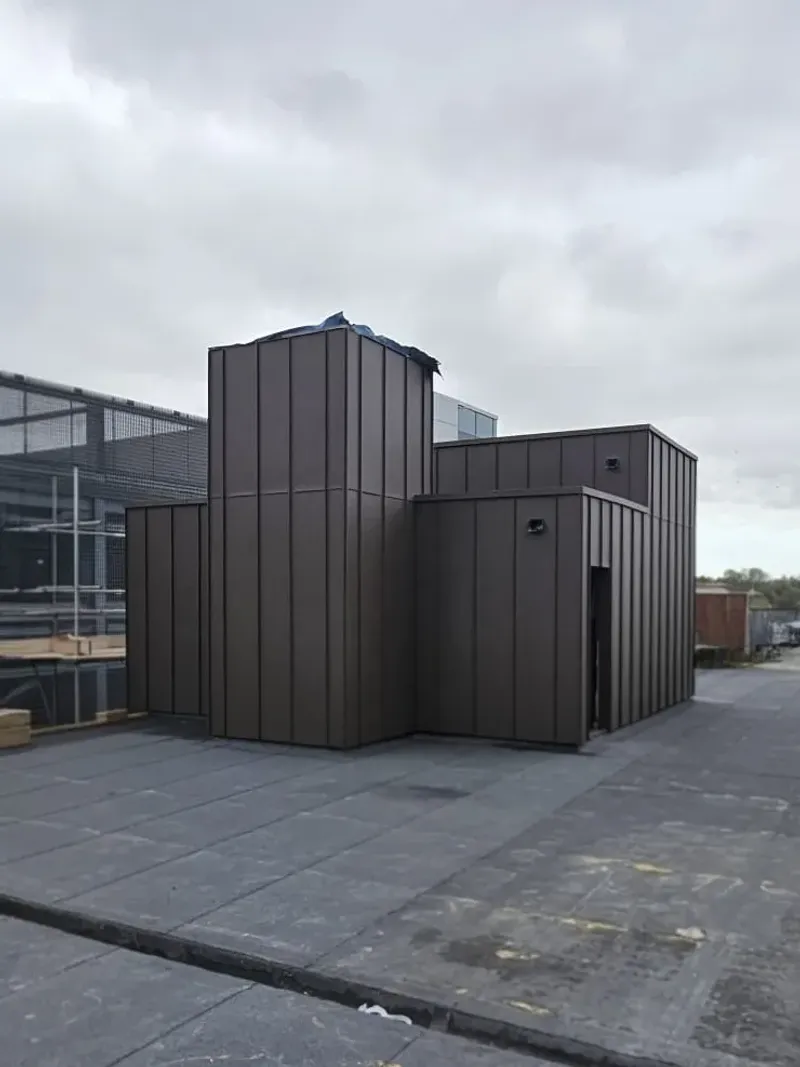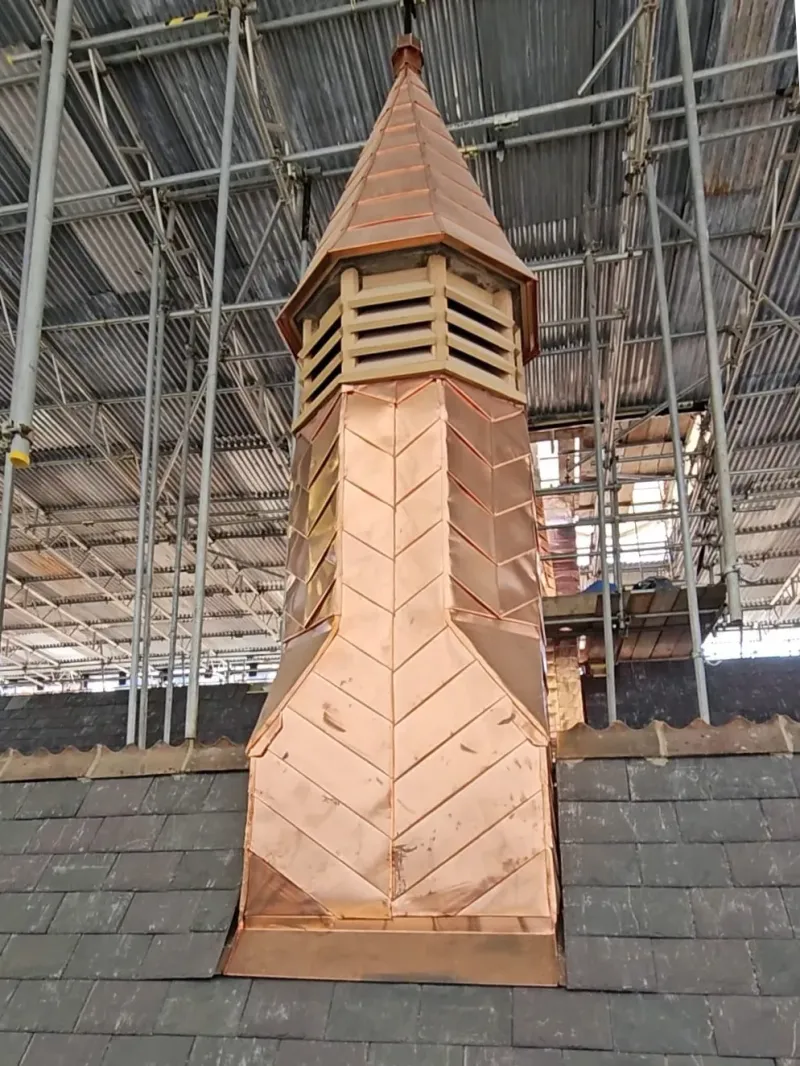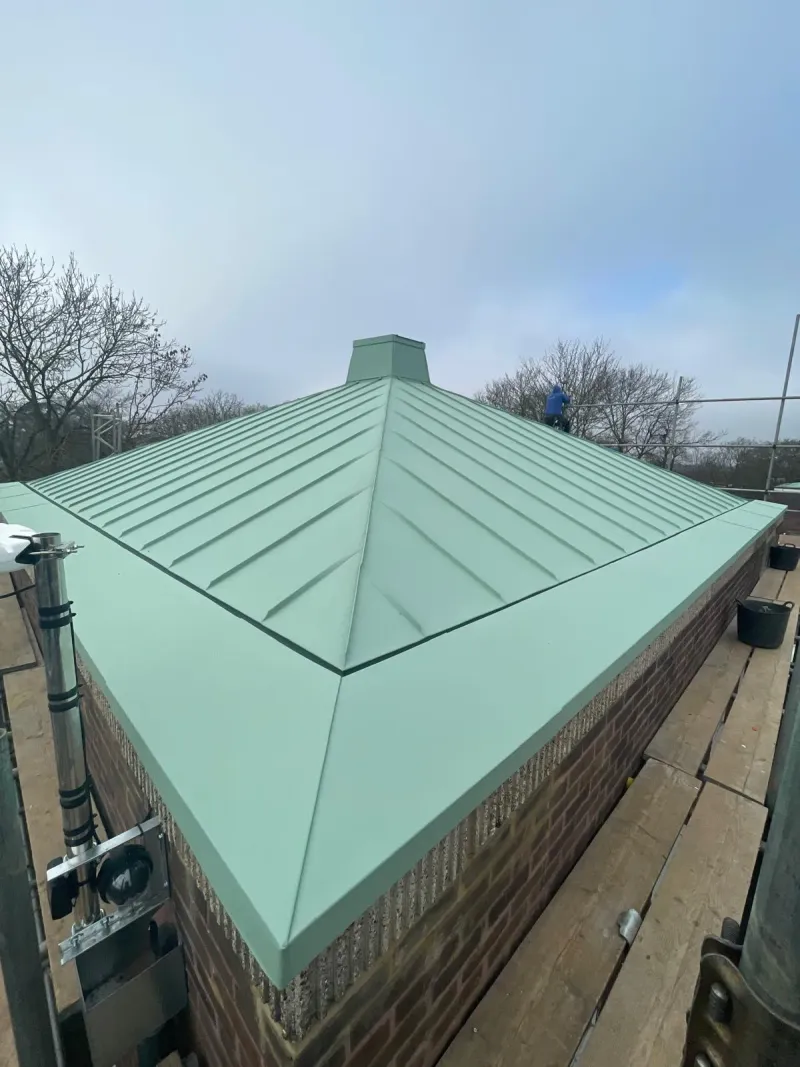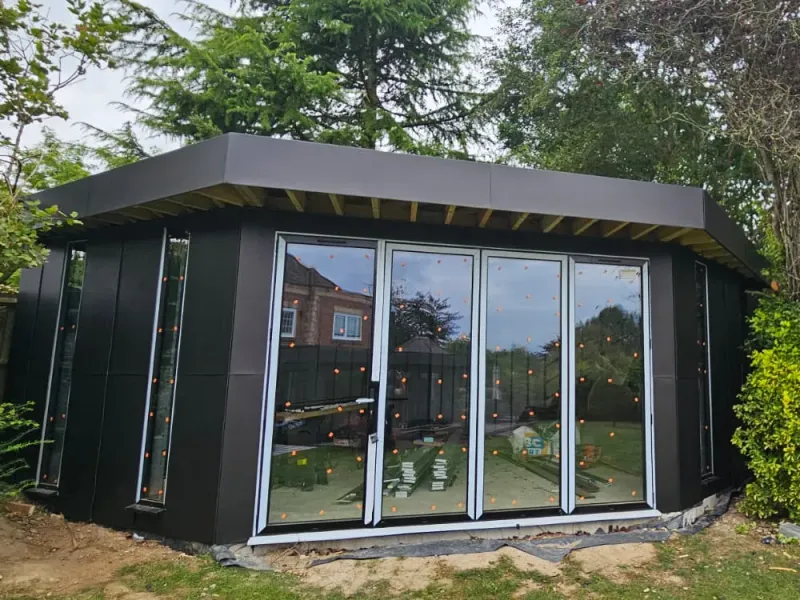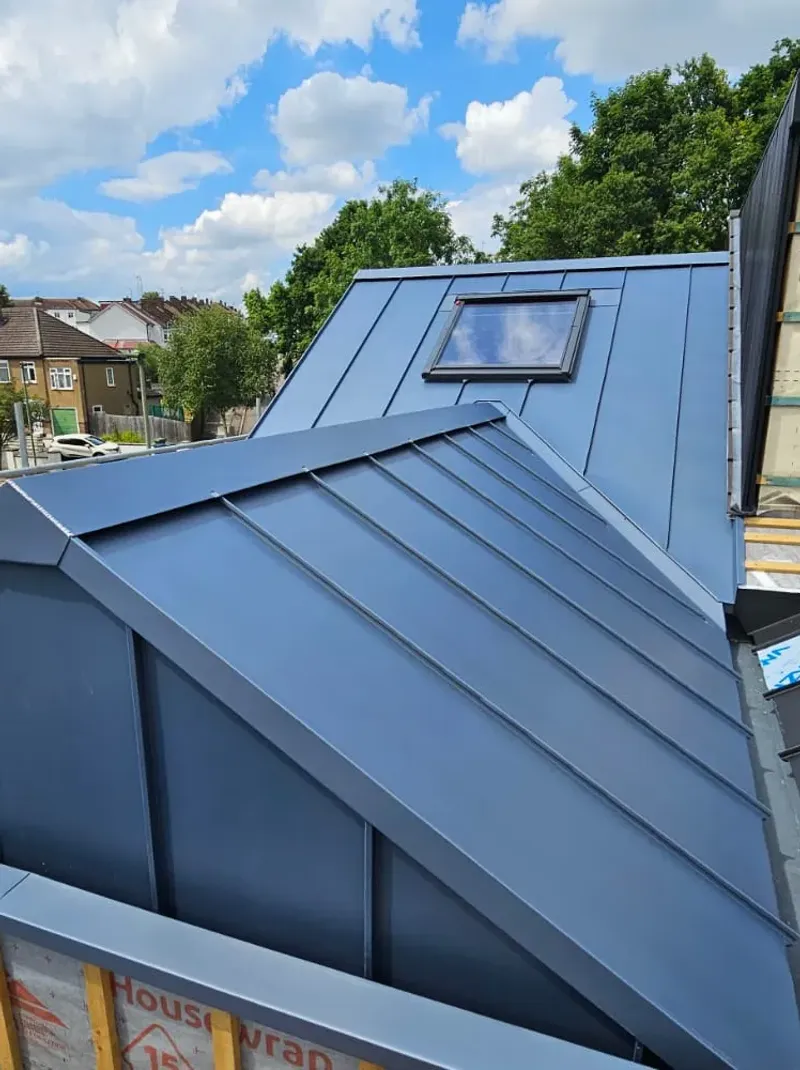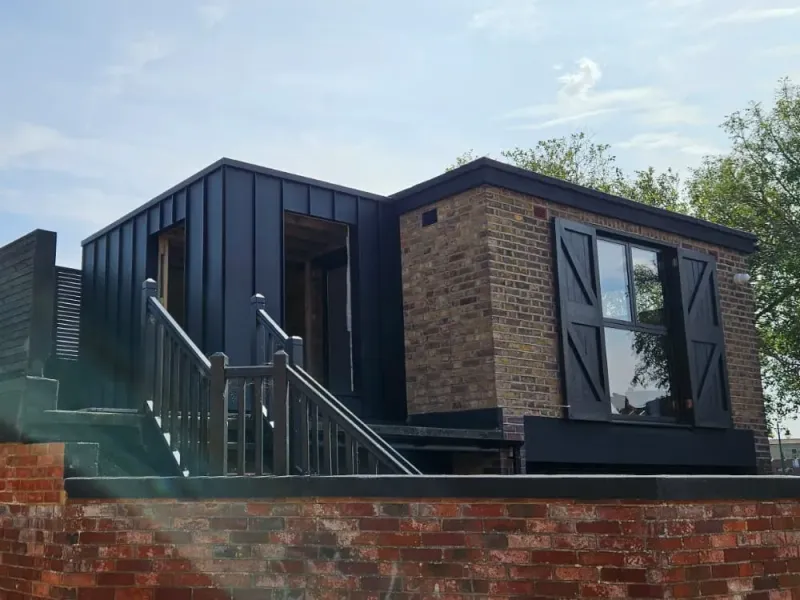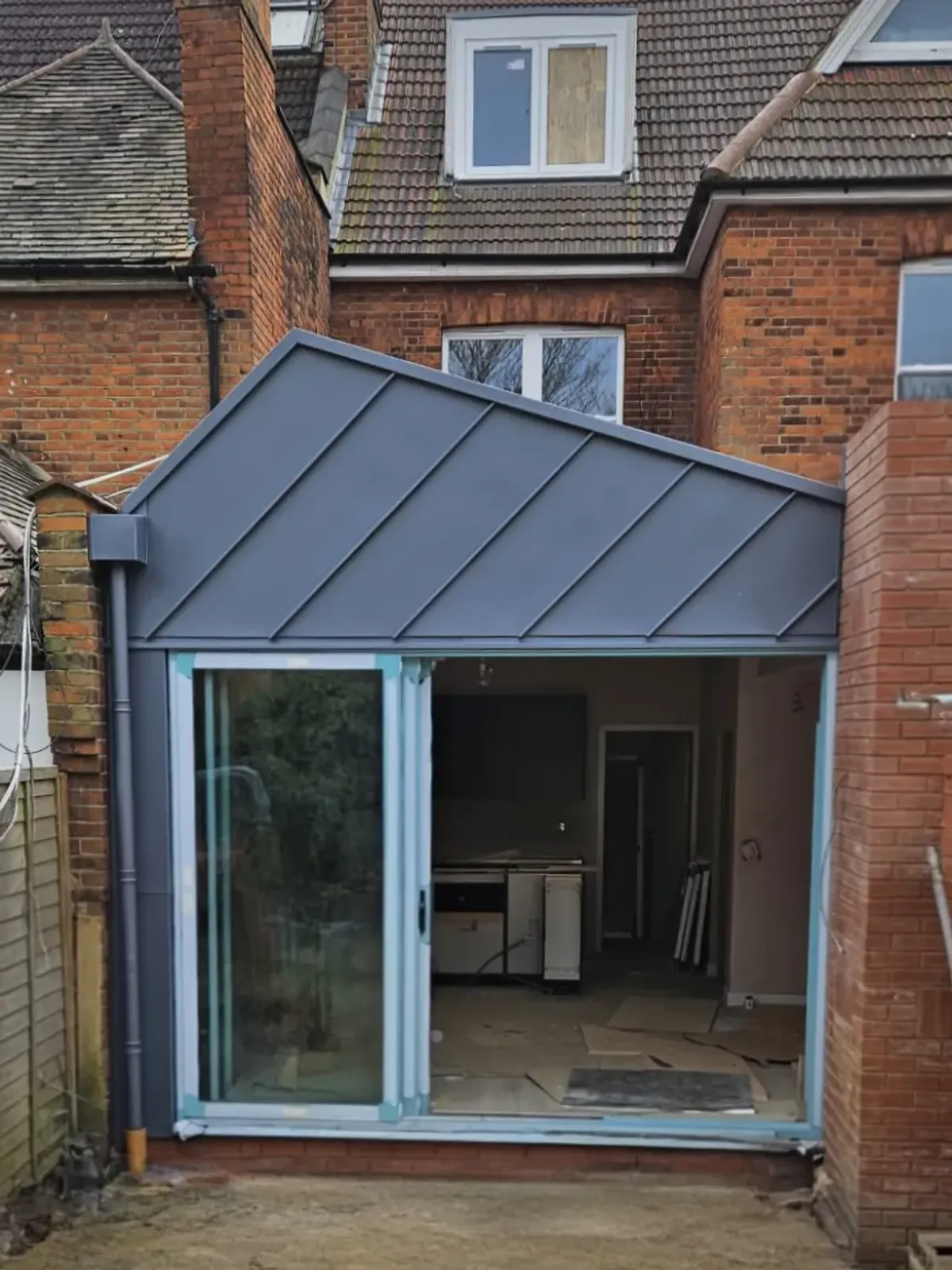
With its raw, natural aesthetic, zinc roofing offers a stylish appeal whether in urban or rural settings. Its exceptional durability, flexibility, and resistance to corrosion make it a smart, long-lasting roofing option.
Why Choose Zinc?
Zinc is one of the most durable roofing materials available, with a lifespan of 80–100 years when properly installed. It develops a natural patina over time that protects against corrosion and gives it a distinctive, evolving appearance.
- Self-healing: minor scratches seal themselves over time
- Lightweight compared to other metal roofing options
- 100% recyclable at end of life
- Suitable for complex roof shapes and low-pitch applications
Applications
Zinc is equally at home on contemporary urban buildings and traditional rural properties. Its flexibility makes it ideal for standing seam roofing, flat roofs, cladding, and intricate architectural details.
Whether you’re looking for a bold statement or a material that blends into its surroundings, zinc delivers lasting quality with minimal maintenance.
Lifespan and Weathering
Zinc is often selected for projects where long-term performance matters as much as appearance. One of its defining characteristics is the patina it develops over time. That natural surface layer helps protect the material from corrosion and gives zinc its distinctive, refined finish.
Because the weathered appearance is part of the appeal, zinc tends to suit projects where the material is allowed to age naturally rather than stay visually static. It can remain elegant and understated for decades, which is one reason it is so widely used in contemporary architecture and design-led residential work.
Like all specialist metal systems, zinc performs best when the supporting build-up and detailing are correct. Ventilation, substrate choice, roof pitch, junction design, and compatible accessories all play a role in how well the system will age and perform.
Where Zinc Works Best
Zinc works particularly well on extensions, new-build homes, dormers, facades, and bespoke roofs where a clean standing seam finish is a core part of the architectural look. Its workability also makes it suitable for more intricate details, including parapets, cheeks, reveals, and shaped elements that would be harder to execute neatly in stiffer materials.
It is often chosen by clients who want a premium but relatively understated finish. Compared with brighter pre-finished metals, zinc tends to feel softer and more natural, which can help it sit comfortably alongside brick, timber, render, and other contemporary external materials.
Is Zinc Right for Your Project?
Zinc is often chosen when a project needs longevity, crisp detailing, and a premium architectural finish. It performs particularly well on extensions, new-build homes, commercial facades, and bespoke roof forms where a clean standing seam appearance is important.
Because zinc is lightweight and highly workable, it can also be a strong choice for refurbishments where structural loading matters. When installed with the correct substrate, ventilation, and detailing, it offers dependable weather protection for decades while keeping maintenance needs low.
At MET-TEC Roofing, we advise on whether zinc is the right fit for the building design, exposure level, and budget before installation begins.
What to Consider Before Choosing Zinc
Zinc is a premium material, so budget is usually part of the conversation. It also benefits from experienced detailing and installation, particularly at junctions and in build-ups where moisture control and ventilation are important. Done well, those details are exactly what allow the roof or cladding to perform and weather properly over the long term.
For clients who want a material with strong design credentials, excellent lifespan, and a finish that matures naturally, zinc remains one of the standout options. We help assess whether it is the best fit for the project itself, not just whether it looks good in isolation.