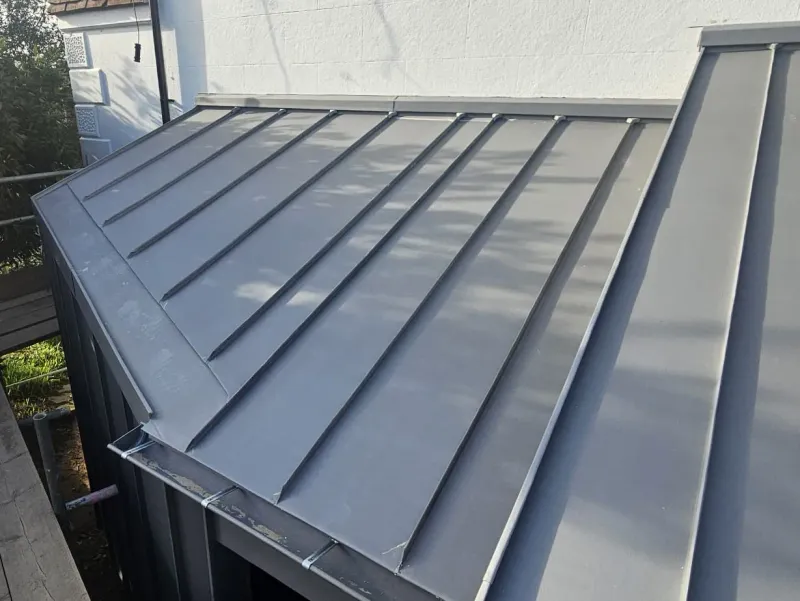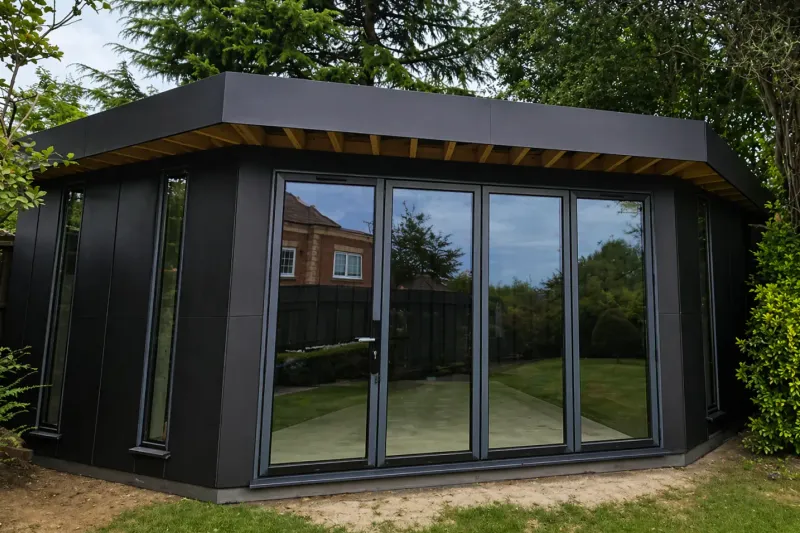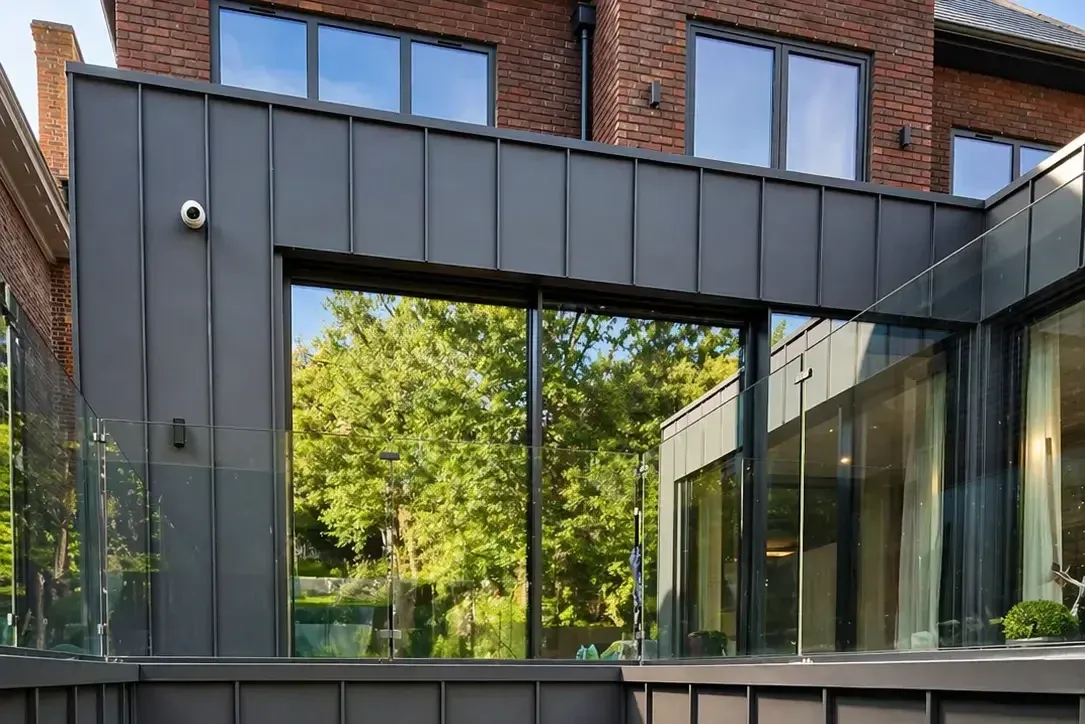
Steel is usually the one clients ask about when the budget for zinc or copper doesn’t quite stretch. It’s the entry point into standing seam metal roofing rather than a compromise material — coated steel systems hold up for decades when they’re specified and installed properly, at a price bracket well below the natural metals.
Where it lands on price still depends heavily on the job. A commercial unit with a large, uninterrupted roof plane prices very differently to a small residential extension with rooflights and a couple of parapets, even though both might be quoted as “steel roofing.”
The short answer
As a rough guide, installed steel roofing in the UK typically starts from around £150–£160/m² for a straightforward roof plane but can be more for complex roofs with rooflights, parapets, or restricted access. These figures include labour, substrate, and basic trims but not insulation or scaffolding.
Steel sits below aluminium, zinc, and copper on upfront cost, which is why it’s often the default recommendation for commercial and larger residential jobs where the roof isn’t the architectural centrepiece. A proper quotation for a steel roof needs to account for:
- the coated steel itself, and the coating specification
- the standing seam or panel system
- underlay, ventilation, and substrate requirements
- insulation and vapour control where included in the scope
- flashings, trims, gutters, valleys, abutments, and rooflights
- labour time for forming, fixing, and detailing
- scaffolding, access, and waste removal
That lower entry cost doesn’t come from cutting corners on installation — it comes from the raw material being cheaper than zinc, copper, or aluminium per kilogram, not from a simpler fitting process.
Why steel costs what it does
The installation side of a steel roof is just as demanding as any other standing seam system — the coating is what’s different, not the fitting method. Installers need to understand the specific coating system being used, since scratching through it during forming or fixing creates a corrosion risk that a bare metal like zinc doesn’t have.
Standing seam steel is fixed with concealed clips, the same principle as zinc or aluminium, which is what gives it a clean face free of visible fixings. Getting the panel layout, perimeter details, and fixing pattern right matters just as much here as with the pricier materials — steel doesn’t forgive bad detailing just because it costs less.
On a straightforward commercial roof plane, a competent crew can move quickly. Add rooflights, gutters, or several wall abutments and the job becomes mostly detailing time — the same pattern that drives cost on every metal roofing system, steel included.
Main factors that affect steel roof cost
Roof size
Steel’s biggest cost advantage shows up on larger roofs — a commercial unit or industrial building with a big, simple roof plane is where the per-m² rate drops closest to the low end of the range, since setup and ordering costs spread across more material.
Small residential jobs don’t benefit from that scale, so a porch or small extension roof can end up priced closer to zinc than you’d expect from steel’s reputation as the budget option.
Roof shape and detailing
A plain rectangular roof plane is the fastest and cheapest shape to sheet in steel. Costs rise when the roof includes:
- rooflights
- parapets
- internal gutters
- hips and valleys
- dormers
- curved or faceted areas
- several wall abutments
- changes from roof to wall cladding
These details are not a problem for steel, but they do take time to form and install properly.
Pitch and build-up
Pitch dictates the seam type, underlay, and drainage strategy on a steel roof, and low-pitched steel needs more careful specification than a standard-pitch roof to avoid standing water at the seams.
Warm roof build-ups, with insulation above the structural deck, tend to be the standard specification on new steel roofs. Cold roof construction still turns up on agricultural conversions and some refurbishments, where ventilation has to be designed in properly to manage condensation risk on the underside of the metal.
Coating specification
Not all steel roofing systems are equal, and the coating specification has a direct effect on cost. Standard polyester coatings are the most economical, while higher-performance coatings for aggressive or coastal environments cost more but extend service life and reduce the risk of premature corrosion at cut edges.
Access and site conditions
A commercial site with clear vehicle access and space for material laydown is a very different access job to a residential rear extension in a tight London terrace, even at the same roof area.
Quotations may need to account for:
- scaffold complexity
- restricted side access
- working over neighbouring property
- parking and loading restrictions
- material storage
- coordination with other trades
On commercial sites specifically, coordination with other trades and site access rules often matter more than on a residential job — a principal contractor’s programme can dictate when and how the roofing crew gets on site.
Is steel worth the cost?
Steel makes most sense when durability and value are the priority, without the premium price bracket of natural metals. It is especially well suited to:
- residential extensions on a defined budget
- commercial and industrial projects where scale and durability matter
- schools, workshops, and retail units
- projects requiring a specific colour to meet planning or branding requirements
It may be harder to justify where a natural patina finish is the priority — in those cases, zinc or copper may be the better fit.
How to get a useful steel roof quote
Useful quotations are based on drawings, photographs, access information, and a clear scope. Before asking for a price, gather:
- roof dimensions or drawings
- pitch or proposed falls
- rooflight positions
- insulation requirements
- preferred coating colour and specification
- photographs of the access and existing roof
- whether scaffold is already included by another contractor
On commercial projects, also have any RAMS or principal contractor requirements ready — it saves a round trip once the quotation stage starts.
Talk to MET-TEC
We install steel roofing and cladding across London and the South East, including extensions, commercial units, and industrial buildings. Send over your drawings or photographs and we’ll give you a realistic view of cost before the specification is locked in — no obligation, just a straight answer on whether steel fits your project and budget.