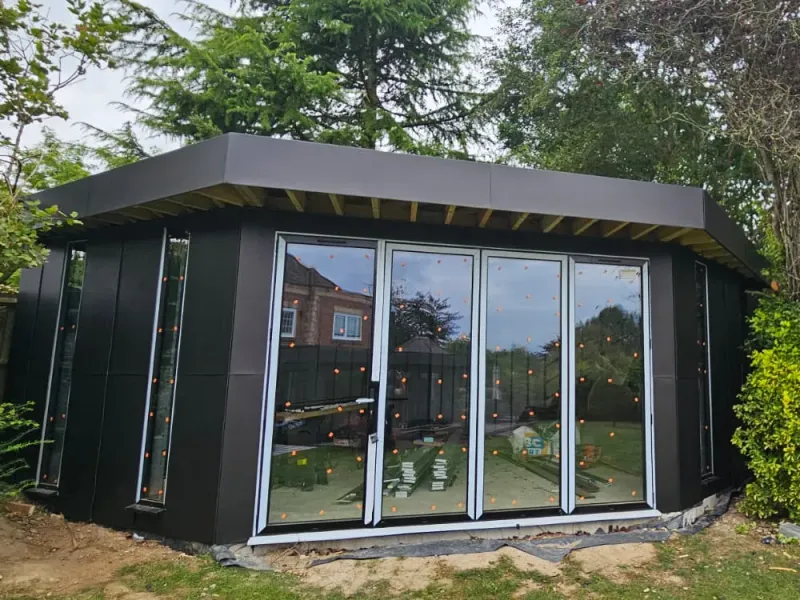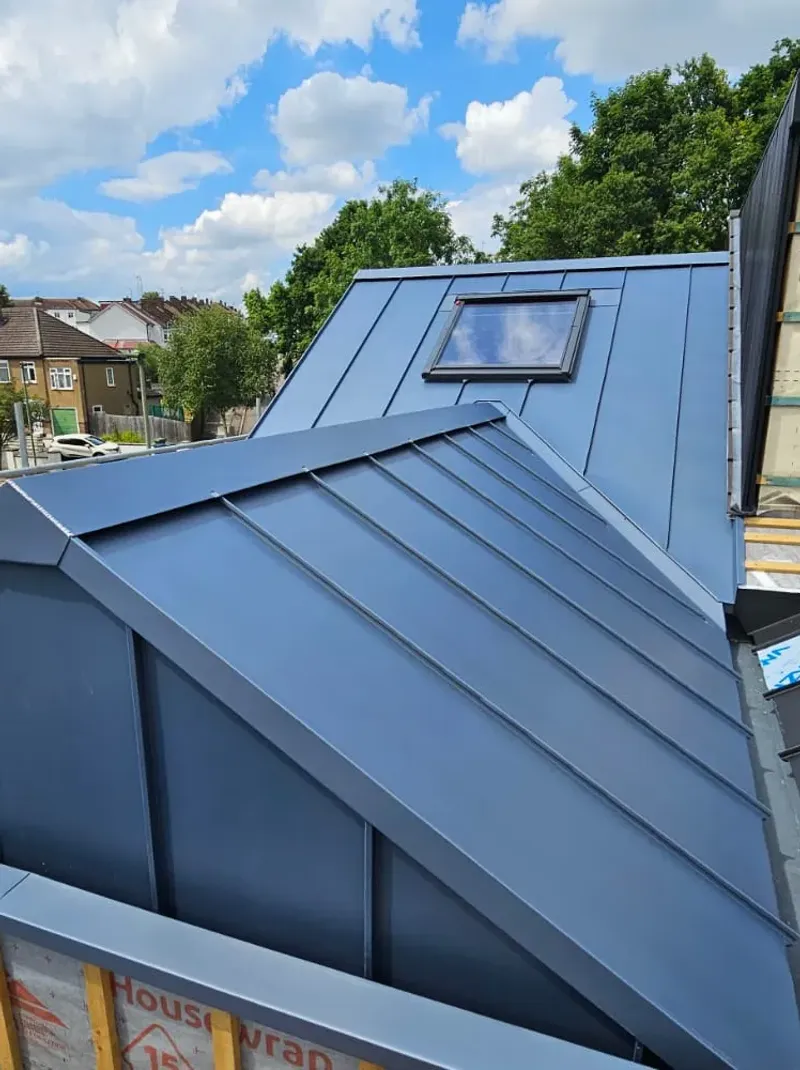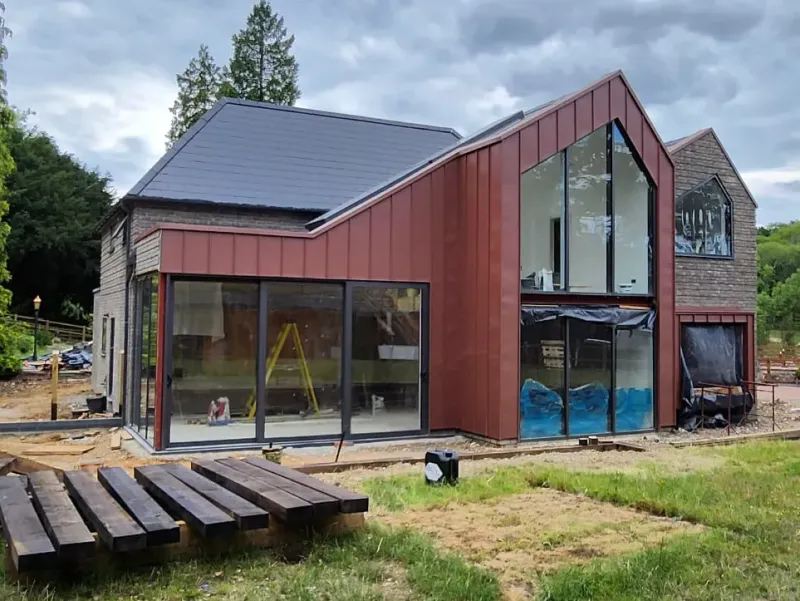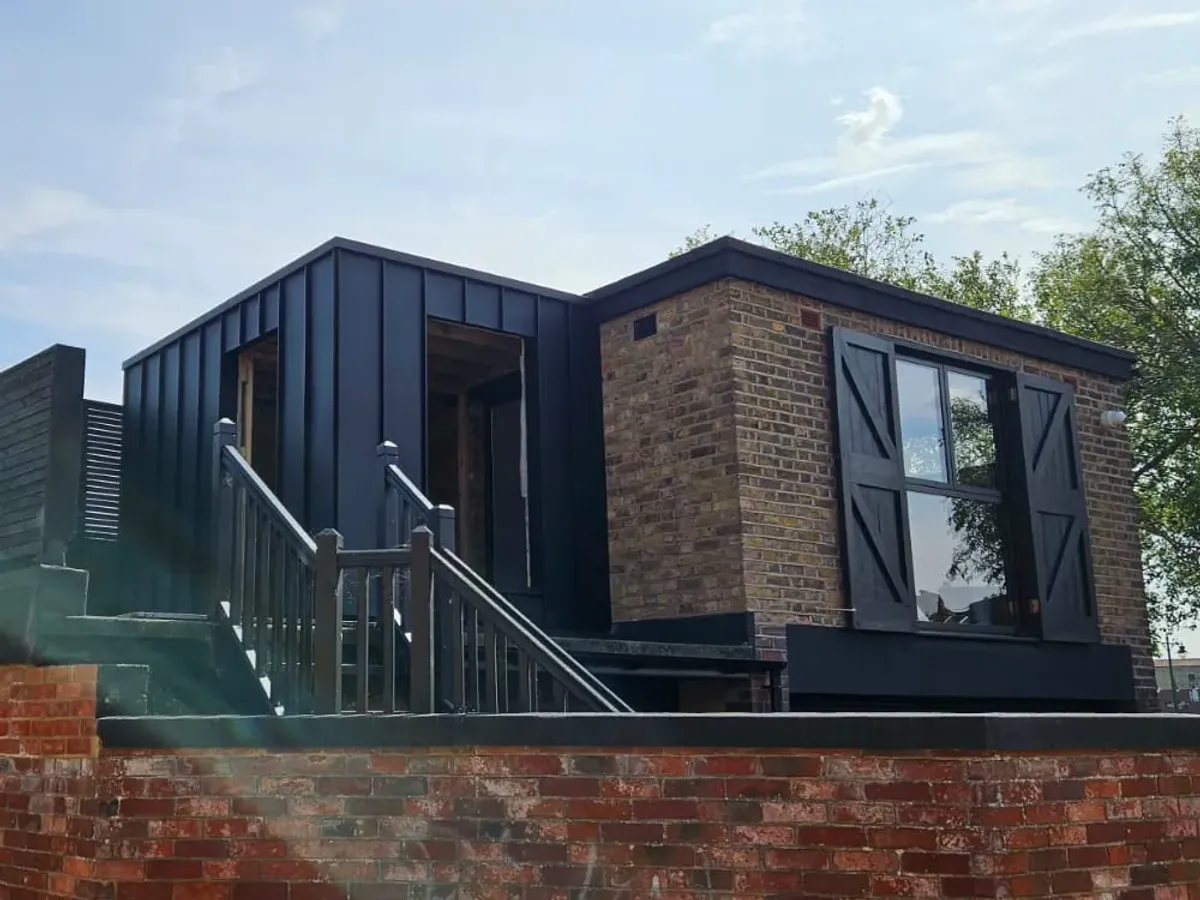
Metal cladding is one of the most versatile and enduring exterior finishes you can choose for a building. But with four main material options — zinc, aluminium, copper, and steel — and meaningful differences between them in cost, appearance, longevity, and performance, choosing the right one is a decision worth getting right at the outset.
This guide breaks down each material across the key criteria and offers a straightforward framework for matching the right metal to the right project.
The four materials at a glance
Before getting into the detail, here is a high-level summary of where each material sits:
Zinc
Zinc is a premium architectural material known for its evolving patina, exceptional longevity, and strong design credentials. It sits in the upper-mid range on cost and is particularly popular on high-specification residential and commercial projects.
Aluminium
Aluminium is lightweight, corrosion-resistant, and available in a wider range of colours than any other metal cladding option. It is the most versatile of the four in terms of finish options and works well across a broad range of project types and budgets.
Copper
Copper is the premium choice — the most expensive material, the longest-lasting, and the most visually distinctive. It is best suited to projects where the quality and character of the material are central to the brief.
Steel
Steel is the most cost-effective option and the strongest by far. It is the workhorse of the group — practical, durable, and available in a wide range of profiles and colours. Weathering steel (Corten) offers a distinct aesthetic option within this category.
Cost
Cost is often the first filter in any material selection decision, and the four metals occupy clearly different positions.
Steel
Steel is the least expensive, both in material cost and typically in installation. Pre-finished coated steel is the most affordable metal cladding option by a significant margin, which is why it dominates agricultural, commercial, and industrial construction. Weathering steel is more expensive than standard coated steel but still typically sits below zinc.
Aluminium
Aluminium occupies the mid-range. It costs more per square metre than steel but less than zinc, and the wide availability of standard systems and profiles keeps installation costs competitive.
Zinc
Zinc is more expensive than aluminium, reflecting the cost of the material itself and the higher level of craft typically required in installation. The whole-life cost argument for zinc is compelling — its longevity means the cost per year of service life compares favourably with cheaper alternatives — but the upfront investment is real.
Copper
Copper is the most expensive of the four by a considerable margin. Material costs are significantly higher than zinc, and installation requires a level of skill and care that adds further to the overall figure. For projects where copper is the right choice, the lifetime economics justify the investment — but it is not a material for projects where budget is the primary driver.
Durability and lifespan
All four metals are durable, but there are meaningful differences in expected service life.
Copper
Copper leads the field. A correctly installed copper cladding system can realistically last 100 years or more — there are copper roofs across Europe that have been in continuous service for two centuries. It does not rust, does not require coating, and its natural patina actually protects the metal beneath.
Zinc
Zinc is not far behind. Expected service life in a UK context is typically 80 to 100 years for a well-installed system. Like copper, it develops a self-protective patina and has a degree of self-healing capability for minor surface damage.
Aluminium
Aluminium has a shorter but still impressive expected service life of 40 to 60 years for a well-specified installation. The longevity depends to some degree on the quality of the finish — anodised aluminium will typically outlast powder-coated aluminium in terms of surface condition, though both perform well with reasonable care.
Steel
Steel varies the most across the category. Standard coated steel can be expected to perform well for 25 to 40 years, with the coating condition being the key variable. Weathering steel, in appropriate applications, can last 60 to 80 years with no maintenance at all. The critical factor with steel is the integrity of the protective system — damage to the coating, if not addressed, can lead to corrosion progressing relatively quickly.
Aesthetics and finish options
This is where the four materials diverge most significantly, and where personal and project-specific preferences will often drive the decision.
Steel
Steel offers the widest range of profiles — from flat panels and standing seam through to corrugated and trapezoidal sheets. Pre-finished steel is available in a broad palette of RAL and BS colours. Weathering steel is a genuinely distinctive material with a rich, textured appearance that has become fashionable in contemporary architecture.
Aluminium
Aluminium offers the greatest colour flexibility of the four metals. Powder coating allows specification in virtually any RAL colour, giving clients the ability to match or complement almost any design palette. Anodised finishes provide a more refined, metallic look. Aluminium also handles complex geometry well, making it a natural choice for curved facades or unusual forms.
Zinc
Zinc has a more restrained aesthetic vocabulary, but within that vocabulary it is hard to beat. The natural grey-blue tones of weathered zinc, and the way the patina shifts in different light conditions, give it a depth and quality that is difficult to replicate with coated materials. Pre-patinated zinc provides a mature, consistent finish from day one. For projects where the material itself is meant to be noticed, zinc rewards the investment.
Copper
Copper is the most dramatic of the four in terms of visual evolution. The journey from bright copper-orange through to deep verdigris green over decades gives a copper-clad building a presence and character that no other material can match. It works particularly well at a human scale — entrances, canopies, feature walls — where the detail and warmth of the material can be appreciated close up.
Maintenance
All four metals are low maintenance relative to most other cladding materials, but there are differences.
Copper and zinc require the least intervention — both develop self-protective patinas, and neither needs painting, coating, or regular treatment. A periodic visual inspection and keeping drainage clear is genuinely all that most installations will need for decades.
Aluminium with a quality finish is similarly undemanding. Occasional washing to prevent the build-up of atmospheric deposits is the main task.
Steel requires more vigilance, specifically around the condition of the protective coating. Any damage to the coating should be addressed promptly to prevent moisture reaching the underlying metal. With appropriate care, steel cladding is straightforward to maintain; without it, problems can develop more quickly than with the other metals.
Sustainability
All four metals are recyclable at end of life, which is a meaningful advantage over many alternative cladding materials. However, there are differences in the sustainability profile of each.
Zinc and copper score well on longevity — the longer a material lasts, the lower its embodied carbon per year of service life. Both are fully recyclable and the construction sector uses a high proportion of recycled zinc and copper already.
Aluminium has a higher embodied carbon at the point of manufacture due to the energy required to produce primary aluminium. However, it is one of the most recycled materials in the world, and recycled aluminium requires a fraction of the energy of primary production. Specifying recycled-content aluminium where possible is a meaningful step.
Steel also has an energy-intensive production process, but is highly recyclable and widely recycled in the UK construction sector.
Which material is right for your project?
Rather than a single answer, the right choice depends on a combination of factors specific to your project. As a general guide:
Choose steel if
Budget efficiency is a priority, or if the project is agricultural, commercial, or industrial in character. Also worth serious consideration for contemporary residential projects where weathering steel’s distinctive look is part of the brief.
Choose aluminium if
You need a specific colour, are working with a complex geometry, or are adding cladding to an existing structure where weight is a consideration. Also the strongest performer in coastal or high-humidity environments where corrosion resistance is paramount.
Choose zinc if
You want a material with strong architectural credentials, a long service life, and a finish that develops naturally over time. Particularly well-suited to high-specification new builds and contemporary extensions.
Choose copper if
Budget is not the primary constraint and you want the finest, most distinctive finish available — one that will make the building look better in 50 years than it does today.
Talk to Met-Tec
Choosing the right metal cladding material is one of the most important early decisions on any project, and it is worth taking the time to get it right. At Met-Tec, we work with all four materials and can help you weigh up the options based on your specific brief, budget, and timeline. Get in touch to start the conversation.