Standing seam is one of the most widely specified metal roofing systems in contemporary construction — and for good reason. It combines a clean, precise aesthetic with a weathering performance that is genuinely difficult to match. If you are considering metal for a roof or facade, understanding how standing seam works and what it offers is a useful starting point.
How standing seam works
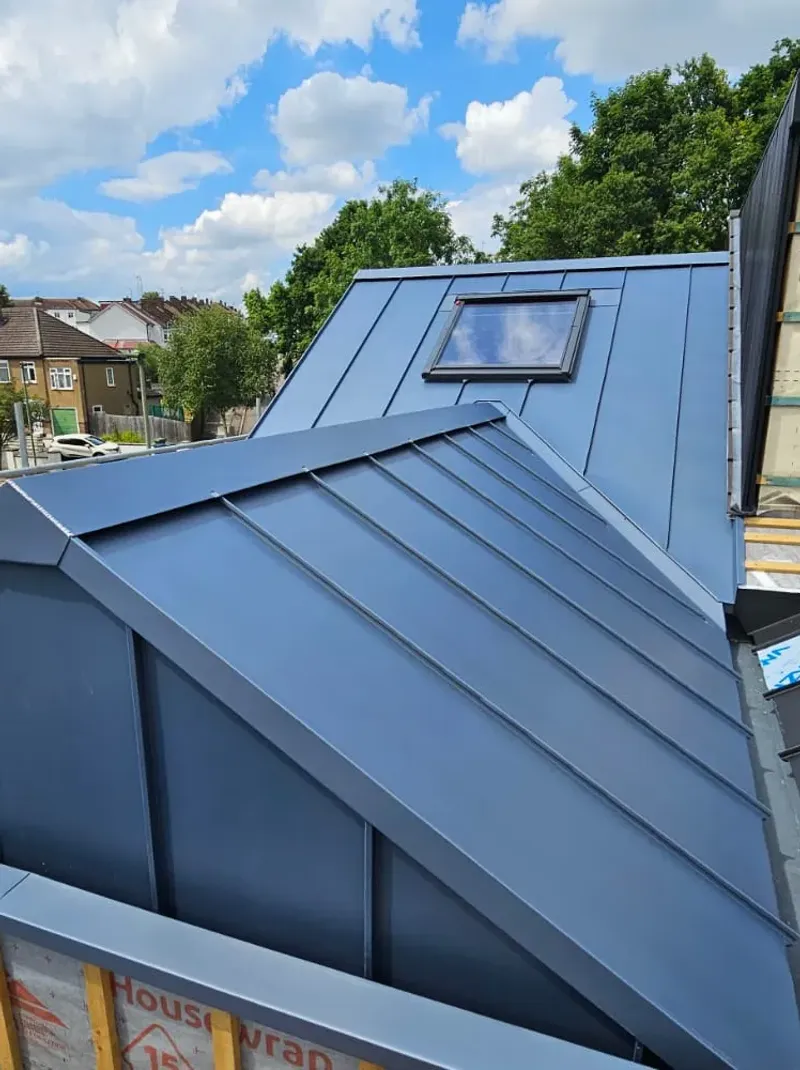
A standing seam system is made up of metal panels that run continuously from ridge to eave (or across a facade). The panels are fixed to the structure using concealed clips that attach at the seams — there are no exposed fixings, no screws through the face of the metal, and no sealant beads to degrade over time. Adjacent panels are then folded and locked together at the seams, creating a raised joint that stands proud of the panel surface.
This approach is the source of most of the system’s performance advantages. Because the fixings are hidden within the seam, there are no penetrations in the weathering layer. And because the panels are clipped rather than rigidly fixed, the system can accommodate thermal movement — the natural expansion and contraction of metal with changes in temperature — without stress, distortion, or loosening of fixings over time.
The result is a roof that performs consistently well over decades, with very few points of potential failure.
Standing seam and flat lock: two systems, different applications
Standing seam is not the only panel system available in metal roofing. Flat lock is a related but distinct approach, and understanding the difference helps clarify which is right for a given project.
Standing seam
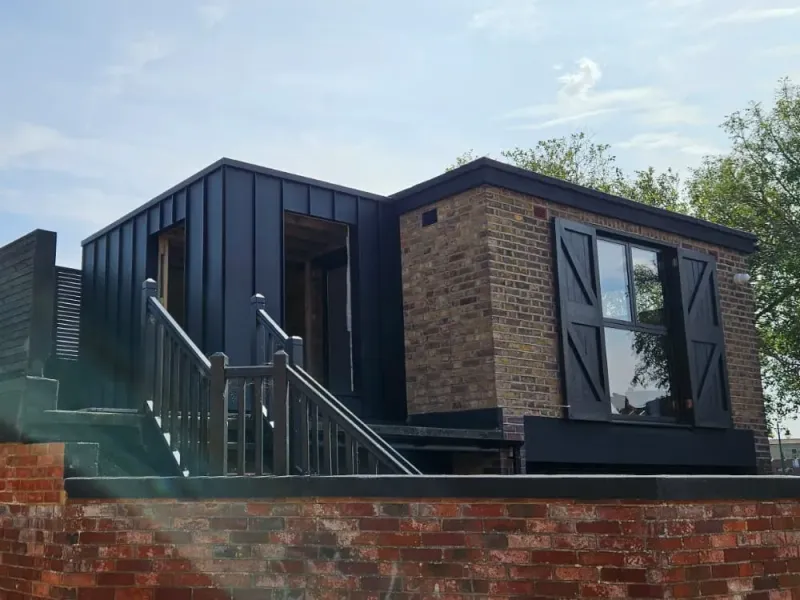
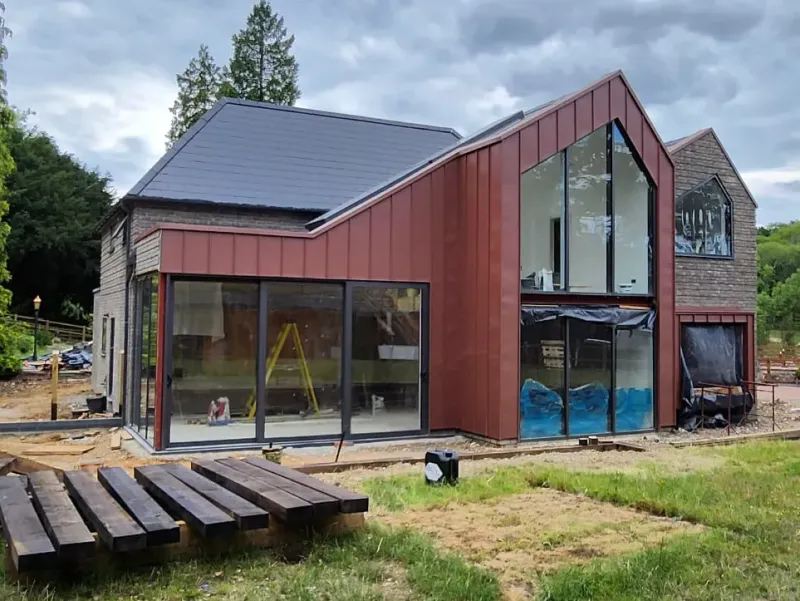
Standing seam panels run in one direction, with raised seams between them. The system works particularly well on pitched roofs and can be installed either vertically or horizontally, giving design flexibility without compromising performance. Vertical installation follows the pitch of the roof and gives a traditional, linear appearance; horizontal banding creates a more layered, contemporary effect.
Flat lock
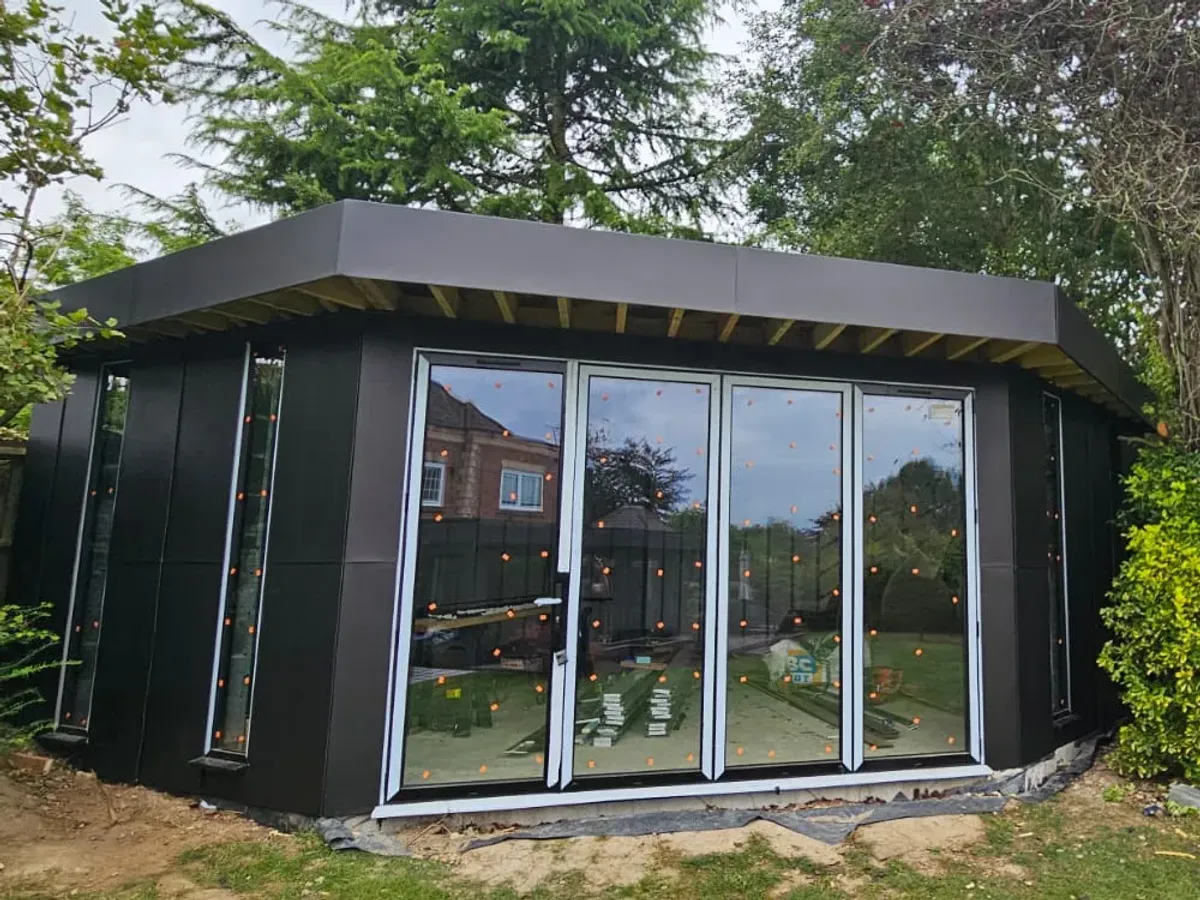
Flat lock panels interlock on all four edges and sit flush with the surface, creating a lower-profile, more uniform finish. Because they work in multiple orientations — horizontal, vertical, diagonal, or in pattern forms like the rhomboid — they are well suited to complex geometries: curved roofs, faceted facades, dormers, and other elements where a raised seam system would be difficult to execute cleanly. Flat lock is also a natural choice where a smooth, uninterrupted surface is part of the design intent.
Both systems are available in zinc, copper, aluminium, and steel, and both can be used on roofs and facades.
Performance
The weathertightness of a standing seam or flat lock system is among the best available for a metal roof. With no exposed fixings and continuous panel-to-panel locking, there is minimal risk of water ingress at the joints — which is where most roof failures occur in conventional systems.
Metal also offers strong resistance to wind uplift, is unaffected by freeze-thaw cycling, and will not crack, split, or degrade from UV exposure in the way that membrane or tile systems can. A well-installed standing seam roof does not have a finite lifespan in the conventional sense — it simply needs to be maintained and, if necessary, repaired at the detail level.
Aesthetics
Standing seam has a distinctive visual quality that has made it a standard choice in contemporary architecture. The raised seams create a rhythm across the surface that reads differently depending on the material, the scale of the panels, and the orientation of the installation. In zinc, the play of light across the patinated surface gives depth and texture that coated materials cannot replicate. In copper, the material evolves from bright warm tones to deep brown to verdigris over decades, giving the building a presence that grows with age.
For projects where the roof is visible — a pitched roof on a prominent elevation, a garage or outbuilding with design intent, or a home extension where the roof is part of the composition — standing seam delivers an appearance that is hard to achieve any other way.
Is it worth the investment?
Standing seam costs more than conventional roofing systems, both in materials and in the level of skill required for installation. That cost is real, and it is worth being clear-eyed about it.
What offsets it is longevity. A standing seam roof installed in zinc or copper is not a 20- or 30-year solution — it is a 60- to 100-year solution, with minimal maintenance costs over that period. There are no periodic replacement cycles, no coating renewals, and no structural repairs driven by water ingress. The lifetime cost, spread over the service life of the system, compares more favourably with cheaper alternatives than the upfront figures suggest.
For the right project — one where quality of construction matters, where the roof is architecturally visible, or where the owner expects to be in the building for the long term — standing seam is a well-justified investment.
Talk to Met-Tec
We install standing seam and flat lock systems in zinc, copper, aluminium, and steel. If you are weighing up which material to use, see our complete guide to choosing your cladding material. Or get in touch and we can talk through the options for your project.