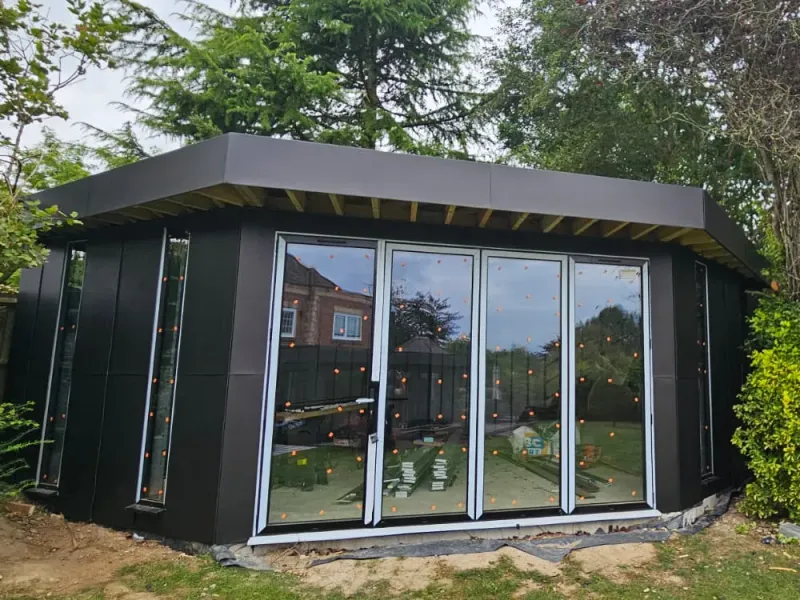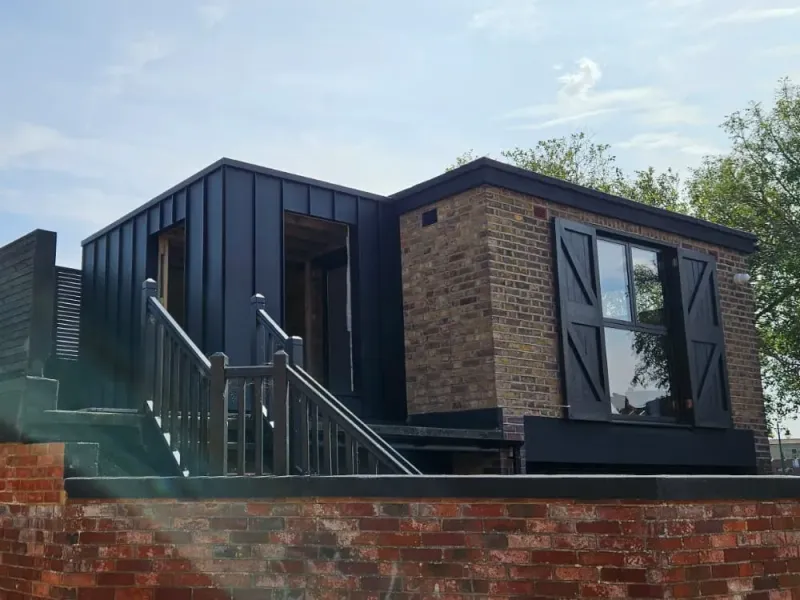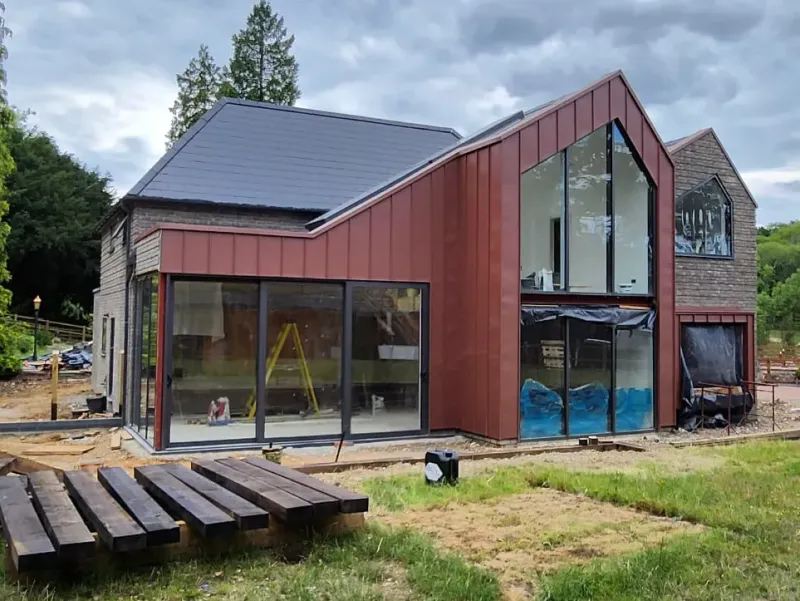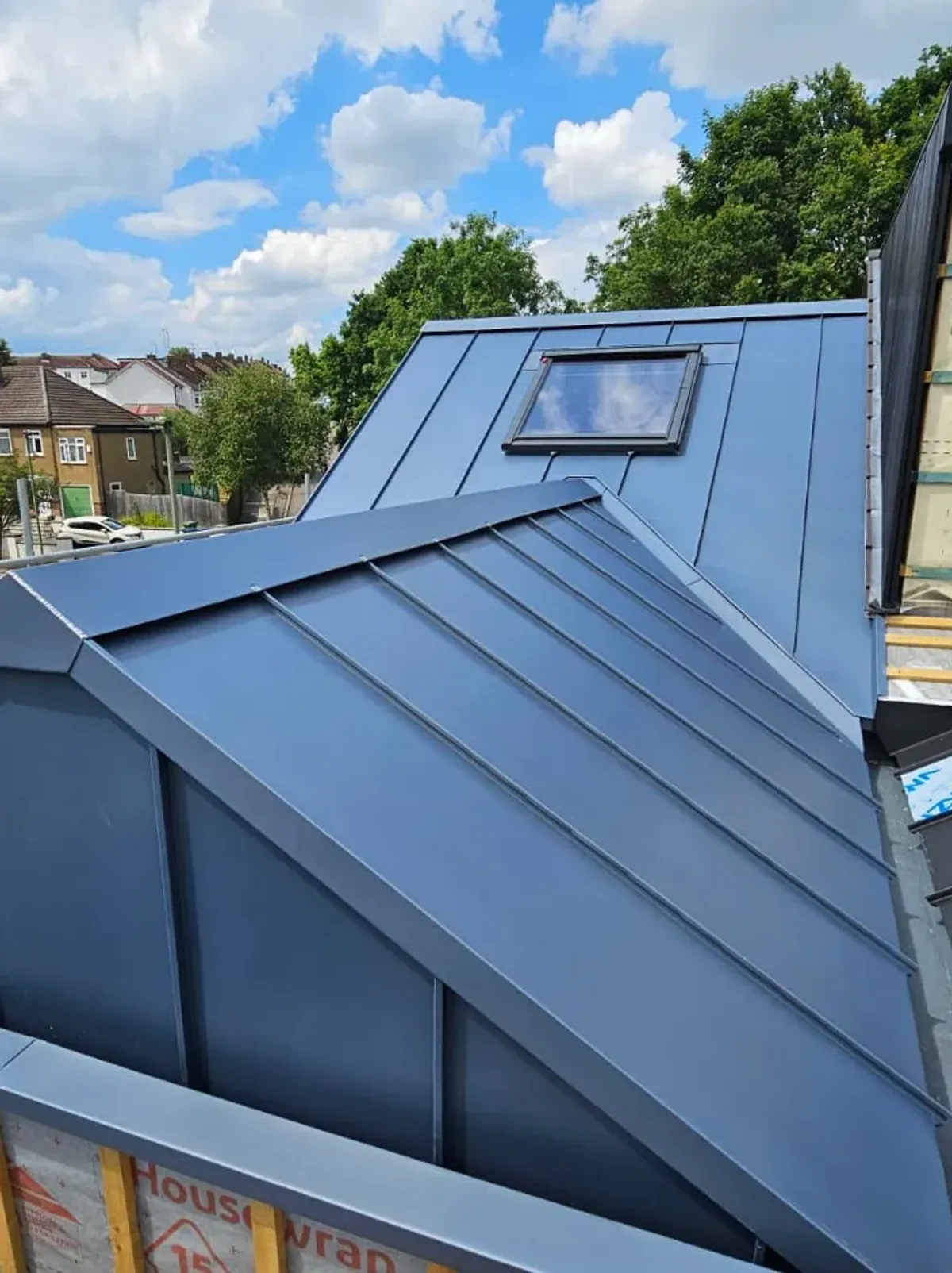
If you are weighing up roofing materials for a new build or replacement project, metal deserves serious consideration. Standing seam systems in zinc, copper, stainless steel, or aluminium have become the preferred choice across a wide range of residential, commercial, and architectural applications — not simply for their appearance, but for the way they perform over the long term.
Durability that lasts for decades
Metal roofs are built to withstand the full range of British weather — sustained rainfall, heavy snow, and high winds — without cracking, warping, or deteriorating in the way that tile or felt-based systems can. Properly installed by an experienced team, a metal roof can realistically last 50 years or more, with copper and zinc systems routinely exceeding 80 to 100 years in service.
That longevity changes the economics of the decision. The upfront cost of a metal roof is higher than many alternatives, but the cost per year of service life — and the absence of major repair bills over that period — makes it a sound long-term investment.
Low maintenance
Once installed, metal roofing systems require very little attention. Periodic visual inspections and keeping drainage clear of debris are generally all that is needed. There is no repainting, no resealing, and no treatment schedule to manage. Materials like zinc and copper develop self-protective patinas that actually improve their resistance to the elements over time.
Energy efficiency
Many metal roofing systems are available with finishes or coatings designed to reflect solar radiation rather than absorb it. This reduces heat gain during warmer months and can meaningfully lower cooling costs in well-insulated buildings. Metal also works well in conjunction with underroof insulation systems, contributing to strong overall thermal performance.
Sustainability
Metal roofing is one of the more environmentally responsible choices available. Most materials contain a proportion of recycled content, and all four metals — zinc, copper, steel, and aluminium — are fully recyclable at the end of their service life. Combined with a lifespan that can exceed a century, the embodied carbon per year of use compares well with shorter-lived alternatives.
Metal is also non-combustible, fire-resistant, and immune to the mould, rot, and insect damage that affect organic roofing materials.
Aesthetic flexibility
This is where metal distinguishes itself most clearly from conventional roofing. The materials are genuinely beautiful, and they improve with age rather than declining. Zinc develops a blue-grey patina that shifts with the light. Copper moves from warm copper-orange through browns to a distinctive verdigris green over decades. Steel and aluminium are available in a broad palette of colours and profiles, giving significant design flexibility across both traditional and contemporary contexts.
Standing seam detailing in particular has a clean, precise quality that works well on everything from heritage properties to contemporary extensions and new builds.
Choosing the right material
Each of the four metals has a distinct profile in terms of cost, longevity, appearance, and performance. For a detailed breakdown of how zinc, copper, steel, and aluminium compare across these criteria, see our complete guide to choosing your cladding material.
Talk to Met-Tec
We work with all four materials and can help you identify the right solution for your project based on your brief, environment, and budget. Get in touch to start the conversation.