Standing seam and flat lock are both high-performance metal panel systems with concealed fixings, long service lives, and a place in serious architectural work. They are not interchangeable. The choice between them is mostly determined by pitch and geometry, and on some projects the roof itself makes the decision for you. Here is how to think through it.
How the two systems work
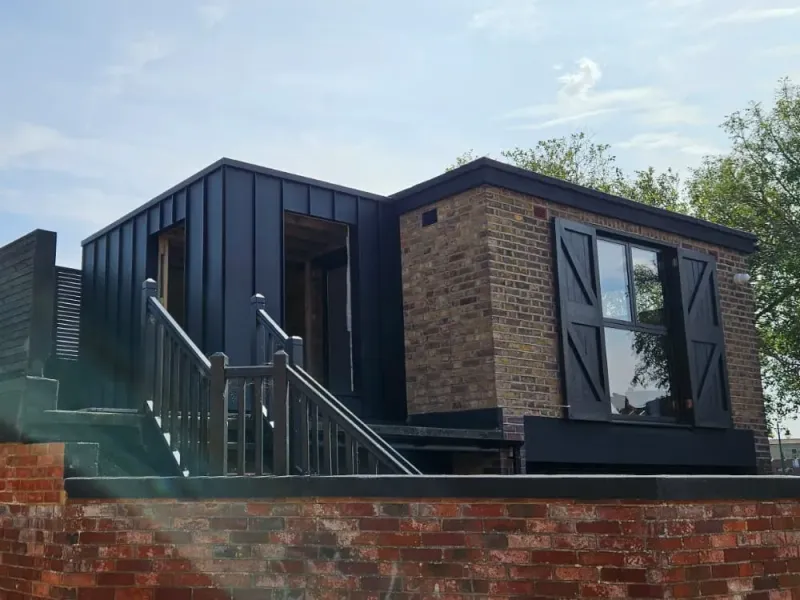
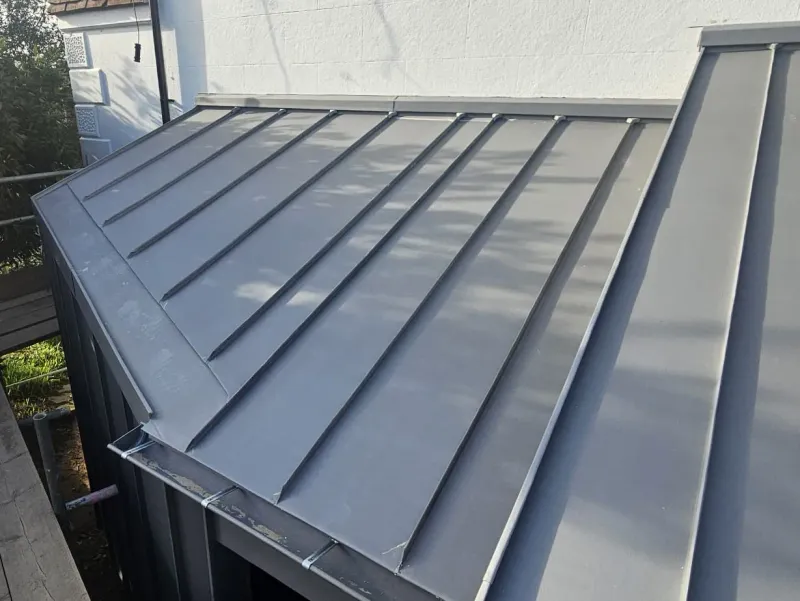
Standing seam is built from panels that run in a single direction, typically ridge to eave on a pitched roof, or top to bottom on a vertical facade. The panels are fixed to the structure using concealed sliding clips that attach at the seam position, with no fixings penetrating the face of the metal. Adjacent panels are then folded and locked together, creating a raised joint that sits 25mm above the panel surface. That raised seam is where the system gets its name, and it is the key to how the system performs.
The clips are designed to slide as the metal expands and contracts with temperature. This is not a detail that can be improvised: metal moves, and a system that does not accommodate that movement will develop stress, distortion, or loosened fixings over time. Standing seam handles it properly by design.
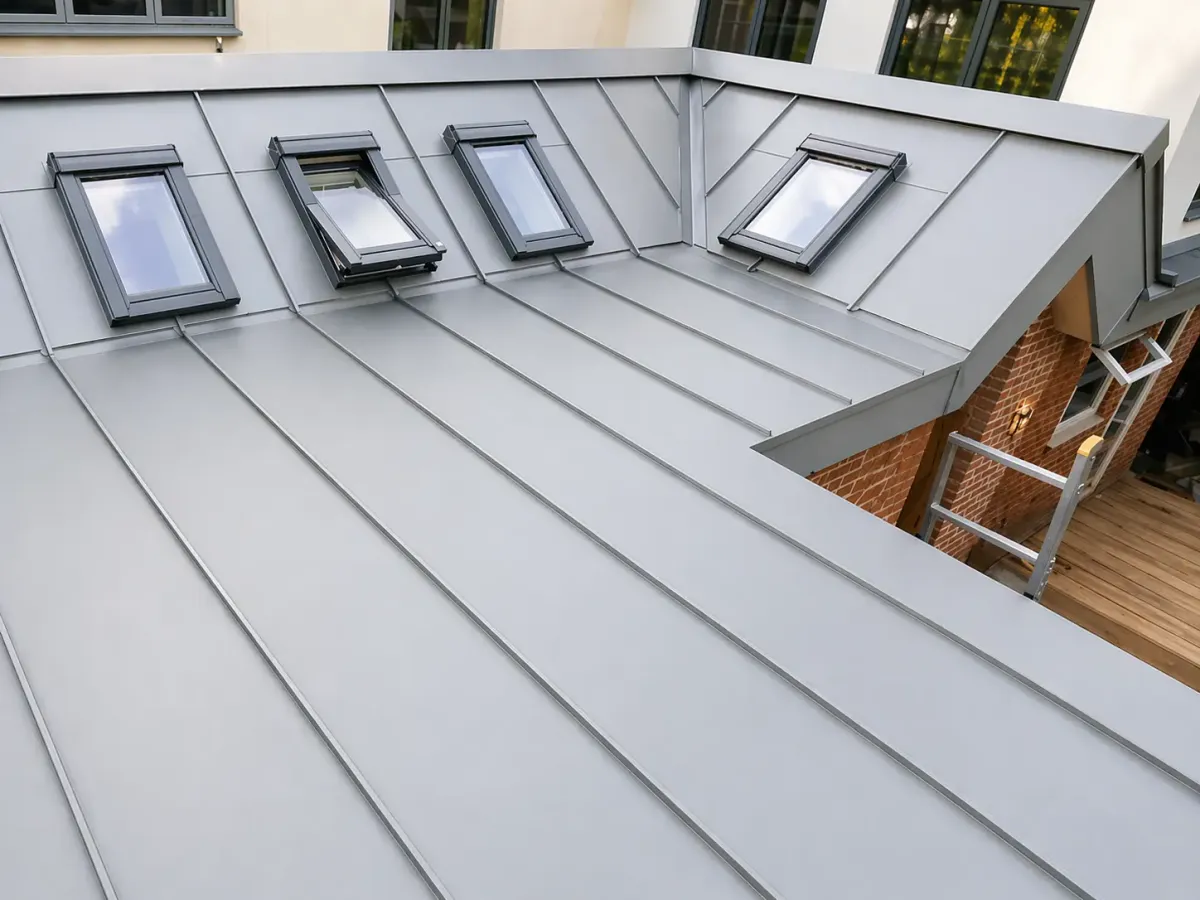
Flat lock works differently. Rather than running in one direction with raised seams between panels, flat lock uses smaller individual panels that interlock on all four edges: top, bottom, and both sides. The panels sit flush with the surface, with no raised joint. Each panel is fixed using a concealed clip at one edge; the interlock on the other three edges holds the panel in plane and manages water runoff. The result is a smooth, low-profile surface with no visible fasteners and no projecting joints.
Because the panels are smaller and interlock in all directions, flat lock can be laid in any orientation: horizontal, vertical, diagonal, or in rhomboid patterns. That flexibility is central to what flat lock is for.
Pitch: where the choice is often made for you
Pitch is the single most important criterion when deciding between these two systems on a roof, and it is worth being direct about it.
Standing seam works from around 3 degrees of pitch upwards. At that shallow angle, the double-lock seam (where the panel edge is folded twice) combined with seam sealing tape provides a weathertight joint even with very slow drainage. Single-lock standing seam, where the panel edge is folded once rather than twice, is less suitable below around 7 degrees without additional detailing. For most low-pitched extension roofs, double-lock standing seam is the specified system for this reason.
Flat lock as a roofing system needs a minimum of around 25 degrees. Below that pitch, water cannot drain quickly enough across the face of the panel and between the interlocking edges to prevent ingress. This is not a detail that can be engineered around on a shallow roof. It is a fundamental limit of the system when used overhead. Below 25 degrees, flat lock is a facade cladding system, not a roofing system.
This means that if your project is a flat or low-pitched extension roof, standing seam is the answer. Flat lock is not a choice you can make at those pitches. Conversely, on a steeply pitched visible roof, say 35 degrees or above, either system can work, and the decision shifts to appearance and geometry.
Geometry and form
On a straightforward rectangular roof plane, standing seam is typically the natural choice. The panels run continuously from ridge to eave, the seams create a clean linear rhythm across the surface, and the installation is efficient. On extensions and contemporary new builds with simple roof geometry, that linear quality is often exactly what the architect or homeowner wants.
Where standing seam becomes harder to work with is on complex forms. A curved surface, a faceted dormer, a compound-pitch hip, or a facade that wraps around a corner all involve geometry that a long continuous panel handles less elegantly. The raised seam, which is a performance advantage on a flat plane, becomes a complicating factor when the surface changes direction.
Flat lock handles complex geometry well. Because the panels are small, typically up to 600×1000mm, with some formats up to 530×2000mm, they can follow curves and changes of plane without the distortion that larger continuous panels would introduce. On a curved dormer cheek, a faceted tower, or a facade with multiple angles, flat lock gives a smooth, consistent surface that standing seam cannot easily replicate.
The ability to change orientation is also useful for design expression that has nothing to do with geometry. A rhomboid or diagonal flat lock pattern on a prominent gable or a dormer face gives a very different reading from the linear seams of a standing seam roof. Whether that is what a project needs is a design question, but the option exists.
How each system looks
Standing seam has a strong linear quality. The seams cast a shadow line across the surface that changes with the light, giving depth and texture that a flat finish lacks. At larger scales, such as a full roof on a new build or a long commercial facade, the rhythm of the seams can be very effective. At smaller scales, on a compact extension or a single dormer, it is equally appropriate but reads differently.
The panel width determines how tight or open that rhythm is. Standard widths run from 430mm to 600mm. Narrower panels give a denser, more traditional appearance; wider panels are more contemporary and can suit larger buildings better.
Flat lock has a lower-profile, more uniform appearance. At a distance, the individual joints are less legible than standing seam seams, and the surface reads almost as a continuous material. Up close, the panel joints create a regular grid, either rectilinear or diagonal depending on orientation, that can be a strong design element in its own right.
Both systems are available in zinc, copper, aluminium, and steel. The material choice interacts with the system choice in ways that are worth thinking through. Zinc in its natural pre-weathered state develops a soft grey patina that suits both the linear reading of standing seam and the more textured surface of flat lock. Copper changes dramatically over its life, from bright warm orange through brown to verdigris, and that evolution is visible at any scale, regardless of system. Aluminium in a pre-finished colour reads consistently over time, which can be the right choice where a specific tone is needed and patina is not the point.
Neither system demands a particular material. But the combination of system and material together determines how the building looks and how it will continue to look over decades, which is worth taking seriously when specifying.
Which system suits which project
For most residential extension roofs that are flat or low-pitched, rectangular, and straightforward to detail, standing seam is the right system. It handles shallow pitches, accommodates thermal movement, and gives a clean finished appearance that holds up well across a wide range of architectural contexts.
For steeply pitched roofs on new builds, loft conversions, or outbuildings where the roof is architecturally prominent, either system can work. Standing seam gives a stronger linear rhythm; flat lock gives a smoother, more uniform surface. The decision is partly aesthetic and partly driven by whether there is any complexity in the geometry.
For complex geometry such as curved forms, dormers with compound pitches, faceted facades, or any element where a raised seam would be difficult to execute cleanly, flat lock is the practical answer. It also suits projects where a non-linear pattern is part of the design intent.
For facade cladding on walls, both systems are used. Standing seam can run vertically or horizontally and gives a bold, directional quality. Flat lock in a horizontal, vertical, or diagonal orientation is common on residential facade refurbishments and new-build elevations where a more textured, panel-based appearance is wanted.
If you are unsure which system your project calls for, the pitch and geometry will usually point clearly in one direction. The cases where the choice is genuinely open, such as steeply pitched roofs with simple geometry and no strong aesthetic preference either way, are the ones worth talking through with a contractor who installs both.
Talk to MET-TEC
We install standing seam and flat lock in zinc, copper, aluminium, and steel across London and the South East. We work on residential extensions, new builds, self-build projects, and complex refurbishments, and we’re used to advising at the design stage before the specification is finalised.
On low-pitched extension roofs, the system choice often links directly to the roof build-up. If you are still deciding how the insulation and ventilation should be arranged, read our guide to warm roof vs cold roof zinc roofing before the metal specification is fixed.
If you’re deciding between these two systems, or you have a project where the geometry makes the choice complicated, get in touch. We offer free advice and quotations. Our complete guide to choosing your cladding material is also worth reading if you’re still working through the material question.