The difference between a warm roof and a cold roof is one of the most important specification decisions on a zinc roofing project. It affects insulation, ventilation, condensation risk, detailing, and the long-term performance of the roof.
For most new residential extensions and design-led projects, a warm roof build-up is usually the cleaner and more predictable option. Cold roofs can still be appropriate in some situations, especially on certain refurbishments, but they need proper ventilation and careful detailing.
This guide explains the difference in plain English and sets out where each approach fits.
What is a warm roof?
In a warm roof build-up, the insulation sits above the structural deck. The deck remains on the warm side of the insulation, which helps reduce the risk of condensation forming within the roof structure.
A typical zinc warm roof build-up may include:
- internal ceiling finish
- structural deck
- vapour control layer
- rigid insulation
- suitable underlay or separation layer
- ventilated or structured layer where required by the system
- zinc standing seam or flat lock covering
The exact build-up depends on the zinc system, roof pitch, substrate, and manufacturer guidance. The important principle is that the main insulation layer is outside the deck, keeping the structure warmer and more stable.
What is a cold roof?
In a cold roof build-up, the insulation sits between or below the structural members, with a ventilated void above it. The deck and zinc covering sit on the cold side of the insulation.
This can work, but it depends on effective ventilation. Moist internal air must be prevented from reaching cold surfaces where it can condense. If ventilation is restricted, blocked, or badly detailed, moisture can build up inside the roof.
Cold roofs are often seen in refurbishment work because the existing structure may make a warm roof difficult without changing roof height, thresholds, or planning details.
Why condensation risk matters with zinc
Zinc is a durable roofing material, but it still needs the right roof build-up beneath it. Condensation trapped within the roof can damage timber, reduce insulation performance, and create long-term moisture problems. In the worst cases, it means stripping and rebuilding the roof.
The zinc itself is not usually the weak point. The risk sits in the layers below: the deck, insulation, voids, membranes, and ventilation paths. A zinc roof that looks correct from the outside can still perform badly if the build-up is wrong.
That is why the roof design should be resolved before the metal is installed. The installer, designer, and main contractor need to understand how moisture is controlled and how the build-up dries out if any moisture enters.
When a warm roof is usually the better choice
A warm roof is usually the preferred route for:
- new rear extensions
- low-pitched zinc roofs
- new-build residential projects
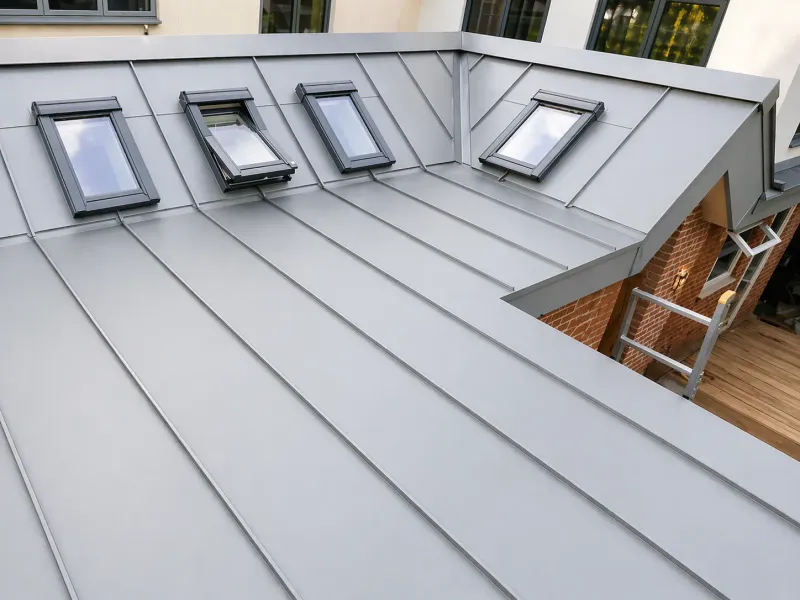
- roofs with rooflights or parapets
- projects where internal condensation risk needs to be minimised
- designs where ventilation routes would be difficult to guarantee
Warm roofs are often more straightforward to get right because they reduce reliance on cross-ventilation through small voids. They can also simplify detailing around rooflights, upstands, and abutments when designed from the start.
On many residential extensions, a warm roof build-up is the most straightforward way to combine insulation performance, airtightness, and a clean zinc finish.
When a cold roof may still be appropriate
A cold roof may be considered where the existing structure limits what can be done above the deck. This can include some refurbishment projects, loft works, or situations where raising the roof build-up would create problems at doors, windows, parapets, or neighbouring boundaries.
Cold roofs are not automatically wrong, but they are less forgiving. The ventilation path has to be continuous and effective. The vapour control strategy must also be clear.
Ventilation problems in a cold roof often go unnoticed for years — by the time the damage shows, the roof needs opening up.
Before choosing a cold roof, check:
- where air enters and exits the ventilated void
- whether insulation could block the ventilation path
- how the roof deals with rooflights and penetrations
- whether internal humidity is likely to be high
- whether the existing structure is dry and suitable
- whether the design has been checked against current guidance
If those answers are uncertain, a warm roof may be the safer specification.
How the choice affects zinc detailing
The roof build-up affects more than insulation. It can change the height of upstands, roof edge details, gutter positions, and the relationship between the zinc and surrounding walls.
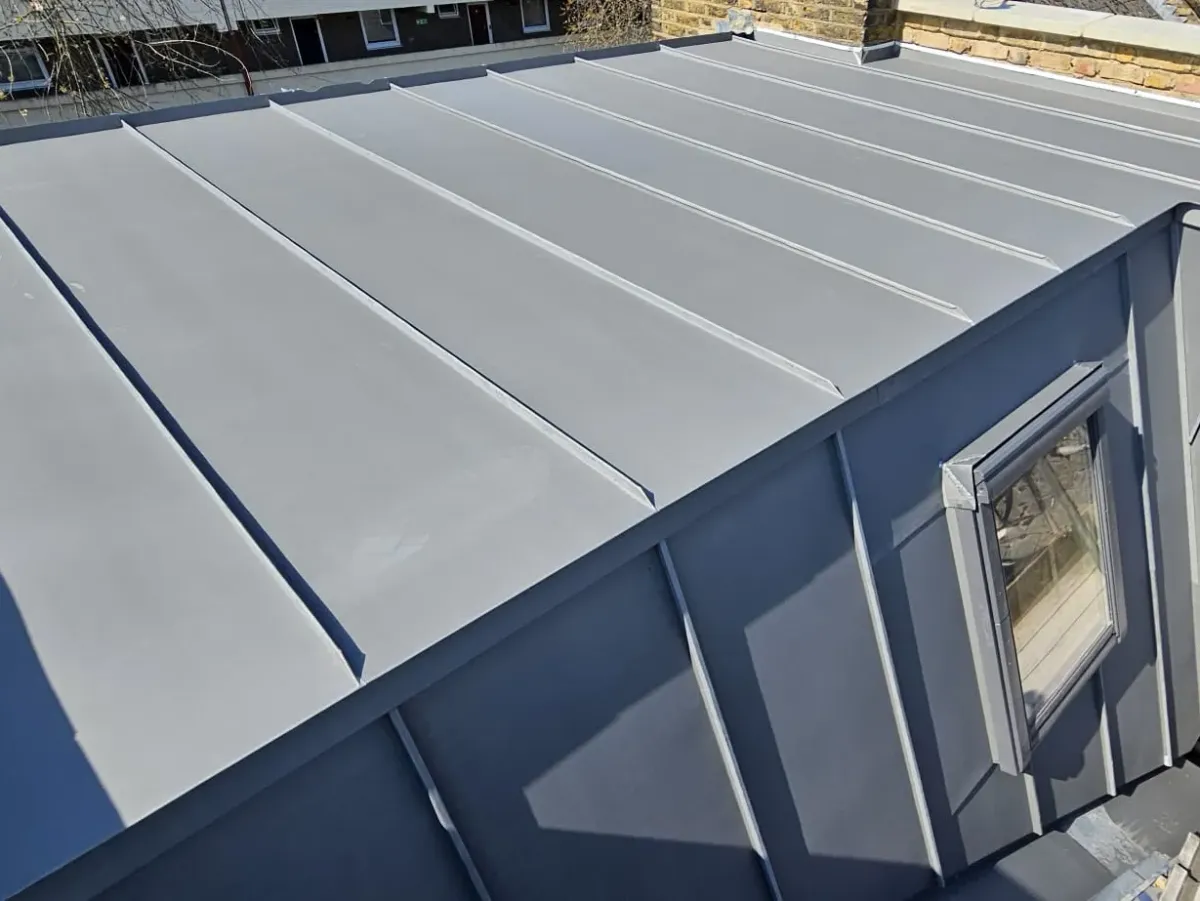
On a low-pitched standing seam zinc roof, the detailing needs to control water movement and thermal movement at the same time. The build-up below the zinc has to support that. Poorly coordinated insulation and deck levels can create awkward edges that are harder to waterproof cleanly.
This is one reason zinc roofing should be considered early in the project rather than after the main structure is already fixed.
Build-up decisions also affect cost. A warm roof can add insulation and detailing cost upfront, but it may reduce risk and simplify the installation on a new extension. Our zinc roof cost guide explains how substrate, insulation, pitch, access, and rooflights change the installed price.
Questions to ask before specifying the build-up
Before deciding between warm roof and cold roof, ask:
- Is this a new roof or a refurbishment?
- Can the roof height increase without causing planning or threshold problems?
- Are there rooflights, parapets, or internal gutters?
- Is there a reliable ventilation route for a cold roof?
- Who is responsible for the vapour control layer?
- Has the zinc system been matched to the pitch and substrate?
These questions are technical, but they have practical consequences. Getting the build-up right makes the zinc installation simpler and the finished roof more reliable.
Talk to MET-TEC
We install zinc roofing across London and the South East, including warm roof and cold roof build-ups for extensions, dormers, and architect-led residential projects.
If you are unsure which build-up suits your project, get in touch. We can review drawings, roof pitch, access, and detailing so the zinc specification is practical before work starts.