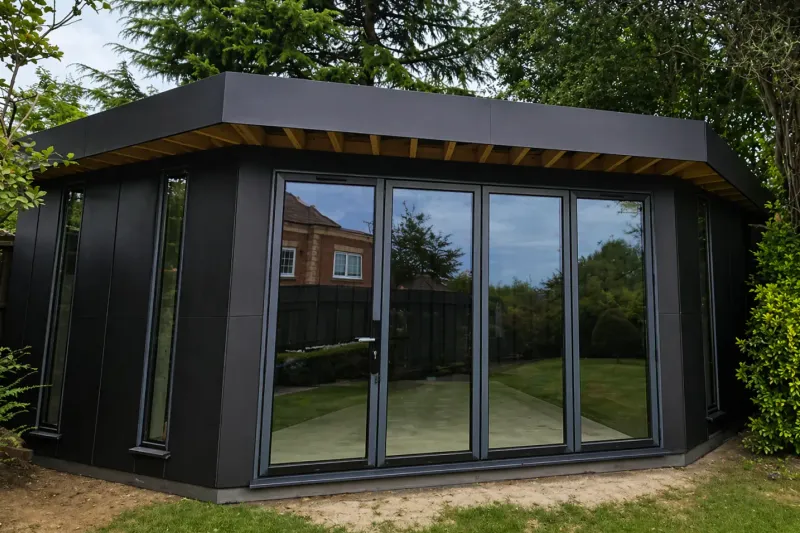
If you’ve had a zinc roof quoted at, say, £4,500 for a modest rear extension and you’re wondering whether that’s fair, you’re not alone — zinc pricing confuses people because it swings so much between similarly sized roofs. This guide sets out where that money actually goes.
As a rule, zinc sits above single-ply membrane and most tiled or felt roof options on upfront cost — closer to a premium architectural material than a budget weathering layer. But “zinc costs more” only gets you so far when you’re staring at an actual number, so here’s the detail behind it.
The short answer
As a rough guide, installed zinc roofing in the UK typically starts from around £160–£180/m² for a straightforward roof plane but can be more for complex roofs with rooflights, parapets, or restricted access. These figures include labour, substrate, and basic trims but not insulation or scaffolding.
Two zinc roofs of identical area can land at very different prices once you factor in pitch, access, substrate, insulation build-up, and the finish specified. A simple rectangular extension roof and a roof with rooflights, hips, parapets, or awkward access are not the same job, even at the same square footage.
A zinc roof is a system, not a sheet of metal laid down and left. A proper quotation needs to account for:
- the zinc itself
- the standing seam or flat lock system
- underlay, ventilation, and substrate requirements
- insulation and vapour control where included in the scope
- flashings, trims, gutters, valleys, abutments, and rooflights
- labour time for forming, fixing, and detailing
- scaffolding, access, and waste removal
For homeowners comparing options, the key point: zinc costs more upfront, but a correctly installed zinc roof can outlast two or three alternative roofing systems over the same building’s lifetime.
Why zinc costs more than standard roofing
Most of what you’re paying for is the installer’s judgement, not the metal itself. Zinc moves as it heats and cools, so panels have to be formed, fixed, and folded by someone who accounts for that movement — get it wrong and the seams split or the panels buckle within a few years.
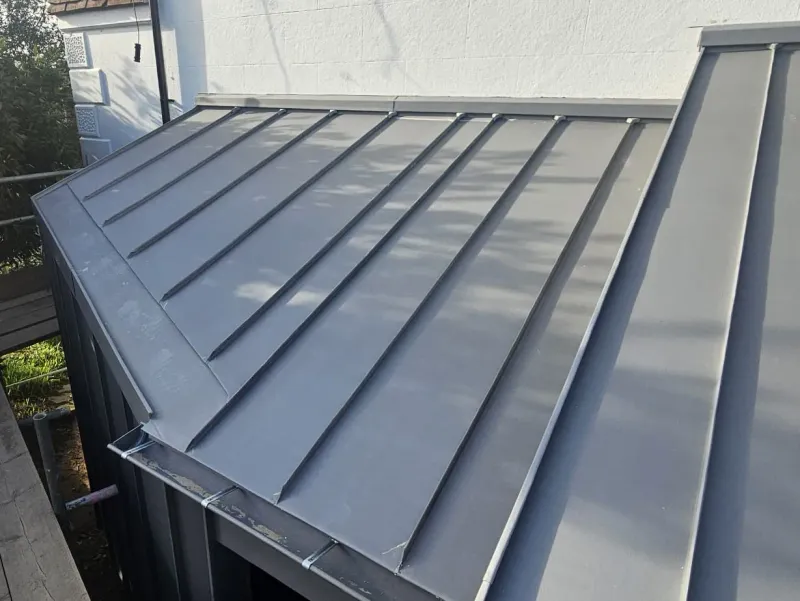
Standing seam zinc uses concealed clips rather than screws through the face of the metal, which is what gives it the clean, uninterrupted look. But it also means every part of the build-up — substrate, panel layout, fixing pattern, perimeter detail — has to be right before the first sheet goes down; there’s no going back to add a fixing once the seam is closed.
Corners, rooflight kerbs, and wall abutments are where zinc roofs actually fail if they’re going to fail, so an experienced installer spends disproportionate time there. A simple rectangular roof can be installed quickly; one with several junctions turns most of the job into detailing rather than sheet-laying.
Main factors that affect zinc roof cost
Roof size
A small bay roof or porch might use only a few square metres of zinc, but the setup, ordering, and hand-forming of details can take almost as long as on a much bigger roof — so the price per square metre on small jobs is often higher than clients expect.
A rectangular rear extension with a clear fall and few penetrations scales far more efficiently. Once a job is big enough to justify the setup cost, the per-m² rate tends to settle down.
Roof shape and detailing
A plain rectangular roof plane is the cheapest form to install in zinc, full stop. Every departure from that adds forming and detailing time. Costs rise when the roof includes:
- rooflights
- parapets
- internal gutters
- hips and valleys
- dormers
- curved or faceted areas
- several wall abutments
- changes from roof to wall cladding
These details are not a problem for zinc, but they do take time to form and install properly.
Pitch and build-up
Zinc on a low pitch needs a different underlay, seam type, and drainage strategy than the same material on a steeper roof, and getting this wrong is one of the more common causes of zinc roof leaks a few years down the line.
Warm roof build-ups, where insulation sits above the structural deck, are usually the cleaner choice on new extensions and tend to be the pricier route upfront. Cold roof build-ups can work on some refurbishments but bring condensation risk that needs careful management — see our guide to warm roof vs cold roof zinc roofing for the technical detail.
If the project is still at material-selection stage, compare zinc vs aluminium roofing for extensions as well. Aluminium can reduce upfront cost where a pre-finished colour is acceptable, while zinc is usually chosen for patina, lifespan, and a natural architectural finish.
Access and site conditions
A detached property with clear scaffold positions and a rear extension squeezed into a tight London terrace are not the same job to get material and scaffolding onto, even with identical roof areas.
Quotations may need to account for:
- scaffold complexity
- restricted side access
- working over neighbouring property
- parking and loading restrictions
- material storage
- coordination with other trades
None of this is specific to zinc — a felt roof on the same site would carry the same access costs — but it’s routinely the difference between two quotes that otherwise look comparable.
Zinc finish
Natural zinc, pre-weathered zinc, and darker or specialist finishes do not all cost the same. The finish also affects the design result. Natural zinc starts brighter and develops its patina over time, while pre-weathered zinc gives a more settled grey appearance from the start.
The right choice depends on the building, planning context, and the surrounding materials.
Is zinc worth the cost?
Zinc makes most sense when longevity, appearance, and detailing quality matter. It is especially well suited to:
- contemporary residential extensions
- visible low-pitched roofs
- dormers and loft conversions
- architect-led new builds
- self-build projects where long-term value matters
- projects where roof and wall cladding need to work together
It may be harder to justify where the roof is hidden, the budget is tight, or the building is likely to be altered again within a relatively short period. In those cases, a single-ply membrane or another system may be the better fit.
How to get a useful zinc roof quote
Useful quotations are based on drawings, photographs, access information, and a clear scope. Before asking for a price, gather:
- roof dimensions or drawings
- pitch or proposed falls
- rooflight positions
- insulation requirements
- preferred zinc finish
- photographs of the access and existing roof
- whether scaffold is already included by another contractor
The more of this you can put in front of a contractor upfront, the less the final number will move once the survey happens.
Talk to MET-TEC
We install zinc roofing and cladding across London and the South East, including extensions, dormers, new builds, and refurbishment projects. Send us drawings or photographs and we’ll walk you through what’s likely driving the cost on your specific roof before you commit to a specification. Get in touch — no obligation, just a straight answer.